Trump peace envoys Steve Witkoff and Jared Kushner set to visit Moscow and Kyiv this weekend 2026
Background: The stalled US‑Ukraine peace push
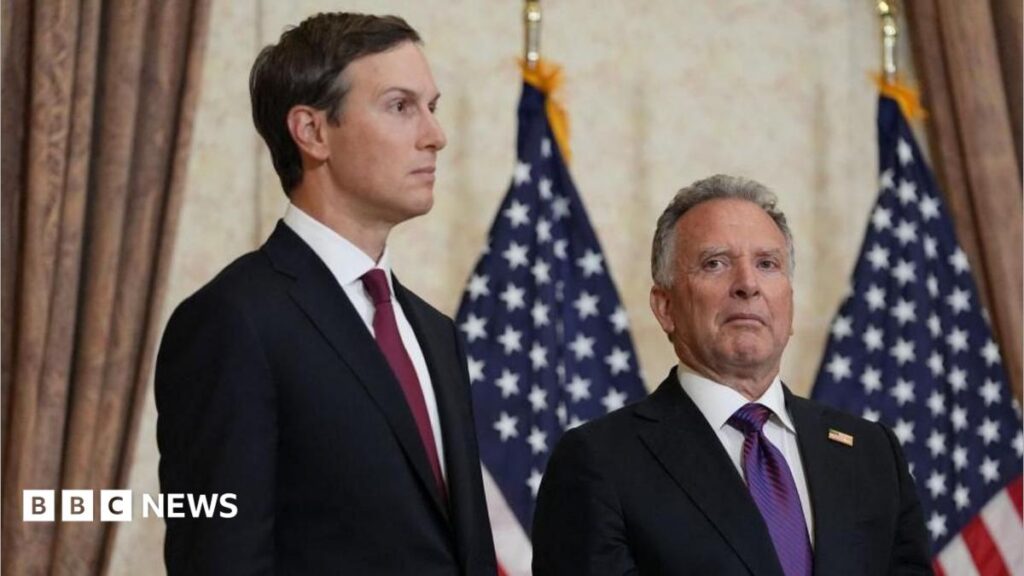
Since President Donald Trump took office in 2025, his administration has repeatedly promised to broker a swift end to the Russia‑Ukraine war that began in 2022. Early in his term, Trump appointed real‑estate magnate Steve Witkoff and former White House senior adviser Jared Kushner to lead a back‑channel diplomatic team, hoping their private‑sector connections could cut through the gridlock that had plagued official negotiations.
The envoy team met with Russian and Ukrainian officials several times in 2025, but progress stalled after Kyiv rejected a draft cease‑fire plan that would have frozen Russian control over the Donbas region. By early 2026, the conflict had settled into a protracted stalemate, with both sides suffering heavy civilian casualties and the war’s economic fallout rippling across Europe and beyond.
What the weekend visit entails
According to multiple sources, Witkoff and Kushner will travel to Moscow on Saturday for a closed‑door meeting with Russian Foreign Minister Sergei Lavrov, followed by a trip to Kyiv on Sunday to meet President Volodymyr Zelenskyy and his foreign‑policy chief, Dmytro Kuleba. The itinerary is deliberately low‑profile; no press briefings are scheduled and the meetings are expected to be off‑the‑record.
Both envoys are expected to bring a set of proposals that build on the “neutral‑zone” concept floated by the Trump administration last year. That plan envisions a demilitarised corridor along the front lines, international monitoring by a coalition that includes African peacekeepers, and a phased lifting of sanctions tied to verification checkpoints.
Why the trip matters for Africa and the diaspora
Africa has been an unintended casualty of the war. Ukraine was a major supplier of wheat, corn and sunflower oil to the Sahel, Horn of Africa and North‑East African markets. Disruptions have forced governments in Kenya, Nigeria and Ethiopia to raise food‑price inflation to double‑digit levels, sparking protests and threatening food‑security programmes funded by the World Bank.
A durable peace would reopen Black Sea grain corridors, allowing ships to resume deliveries to African ports such as Mombasa, Lagos and Djibouti. Moreover, the Trump‑backed proposal to involve African peacekeepers could give the African Union its first large‑scale deployment beyond the continent, raising questions about capacity, funding and the political calculus of African states that have traditionally stayed out of Euro‑Asian conflicts.
Potential ripple effects on global markets and African economies
Financial markets have already priced in the possibility of a cease‑fire. European energy futures fell 3 % on Tuesday after news of the upcoming envoy trip, while the South African Rand strengthened against the dollar, reflecting investor optimism that reduced war‑related risk premiums could lower commodity price volatility.
For African oil‑exporting nations like Nigeria and Angola, a peace settlement could also ease the scramble for alternative energy supplies. Europe’s push to replace Russian gas with African liquefied natural gas (LNG) has accelerated over the past two years; a stable Ukraine could shift the balance back toward European diversification, potentially opening new long‑term contracts for African LNG producers.
Reactions: From Washington to Kyiv and beyond
In Washington, senior officials have publicly urged the envoys to keep the talks constructive but have cautioned against any deal that legitimises the annexation of Ukrainian territory. A State Department spokesperson said the United States remains committed to “a sovereign, democratic Ukraine within its internationally recognised borders.”
Ukrainian officials, meanwhile, have expressed a mixture of skepticism and cautious hope. In a recent interview, Kyiv’s foreign‑policy chief Kuleba said the government is “ready to listen, but any agreement must guarantee the return of occupied lands and the release of all political prisoners.” The diaspora community in the United States and Canada, which has organized massive fundraising drives for Ukraine’s reconstruction, is watching closely, fearing that a rushed settlement could undermine the billions of dollars they have pledged.
What’s next: Scenarios and timelines
If Witkoff and Kushner return with a workable framework, the next step would be a multilateral summit in Geneva, slated for late November, where European Union leaders, African Union representatives and the United Nations would vet the proposal. Analysts at the International Crisis Group say that even a provisional cease‑fire could buy enough time for humanitarian corridors to deliver aid to famine‑stricken regions in Sudan and South Sudan, where grain shortages are already acute.
Conversely, if talks break down, the war could drag on into 2027, further straining African food supplies and keeping energy markets volatile. In that scenario, African governments may have to accelerate domestic agricultural reforms and diversify import sources, a process that could take years and require substantial foreign investment.
Quick Answers
Who are the US envoys trying to negotiate peace between Russia and Ukraine?
The envoys are real‑estate developer Steve Witkoff and former senior adviser Jared Kushner, appointed by President Donald Trump.
How could a peace deal affect food security in Africa?
A settlement would likely reopen Black Sea grain routes, restoring wheat and corn shipments to African countries that rely on Ukrainian exports.
Will African peacekeepers be involved in any new monitoring mission?
The Trump administration’s draft plan proposes an African‑led monitoring contingent, but the details and funding are still under negotiation.
Source: www.bbc.co.uk




💬 Comments 0