Trump switches to decoy plane in Turkey during NATO summit over Iran fears, 2026
Background: A NATO summit shadowed by Tehran
The NATO gathering in Istanbul this week was meant to showcase alliance unity, but it unfolded under a cloud of heightened tension with Iran. Washington had just warned Tehran of “unacceptable” behavior after a series of cyber‑attacks and alleged support for militant proxies, prompting a diplomatic scramble to avoid any accidental escalation on the sidelines of the summit.
President Donald Trump, who has made several surprise trips to Europe since taking office, arrived in Turkey amid a flurry of intelligence briefings. Sources in the Pentagon said that the U.S. command centre flagged a credible threat of a coordinated Iranian effort to disrupt the summit, ranging from cyber‑intrusion to potential hijacking of high‑profile aircraft.
The decoy plane maneuver explained
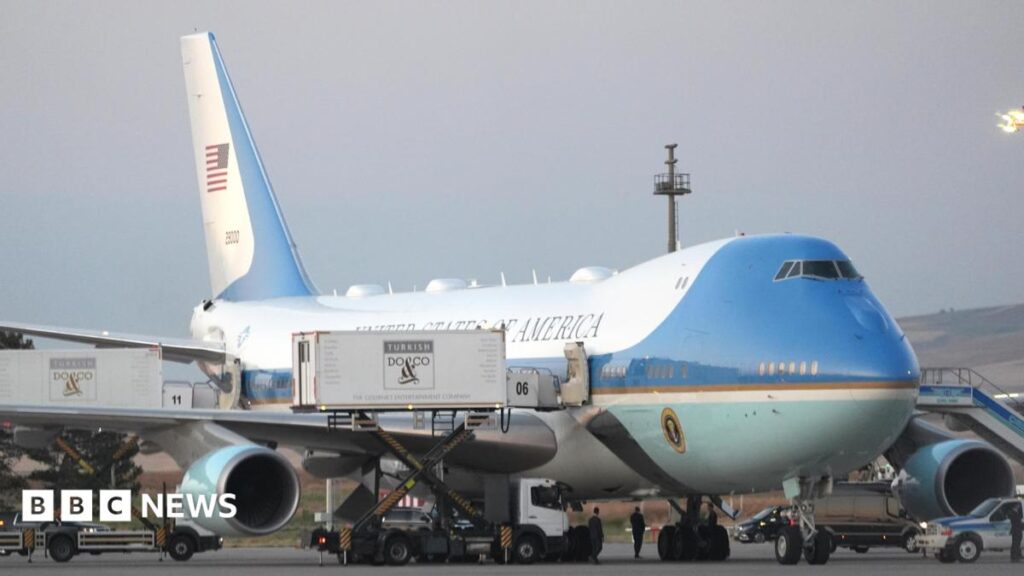
According to a statement from the White House, Trump boarded a secondary, unmarked aircraft on the tarmac while his senior cabinet members stayed on the original flight that had already taken off from Washington. The original plane, a Boeing 757 configured for presidential use, continued on a pre‑planned route toward a secure airfield outside Istanbul, effectively serving as a decoy.
Air Force officials, speaking on condition of anonymity, said the switch was executed within ten minutes of the president’s arrival. The move was intended to keep the president’s exact location hidden from any hostile actors, a tactic that has been used in previous high‑risk trips but rarely disclosed publicly.
Why the switch matters for U.S. diplomacy and security
The decision underscores a growing willingness within the Trump administration to prioritize operational secrecy over diplomatic optics. By separating the president from his cabinet, the United States signalled that it would not be easily baited into a public showdown, even if that meant sacrificing the traditional image of a united leadership team at a multilateral forum.
Experts at the Council on Foreign Relations warned that such a split could complicate real‑time coordination with allies. If the president is insulated on a separate aircraft, his ability to respond to emerging developments—such as an Iranian cyber‑attack on NATO’s communication network—depends on a narrow chain of trusted staff, potentially slowing decision‑making at a critical moment.
Implications for African energy markets and the diaspora
Iran’s strained relationship with the United States reverberates far beyond the Middle East, especially for African economies that rely on oil imports from the Gulf. A sudden escalation could tighten global oil supplies, pushing Brent crude above $100 per barrel—a level that would raise fuel costs across the continent, from South Africa’s transport sector to Nigeria’s power generators.
African diaspora communities in Europe, many of whom work in logistics and energy trading, are also watching the episode closely. A disruption at a NATO summit could affect European stock exchanges, which in turn influence the valuation of African‑listed companies that trade in Euro‑denominated shares. Traders familiar with these markets say that any hint of a U.S.–Iran clash often triggers a short‑term flight to safety, hurting emerging‑market assets.
Reactions from Washington, Ankara, Tehran and beyond
In Washington, senior officials framed the move as a “preventive security measure” and praised the rapid execution by the Air Force. Congressional leaders, however, raised concerns about transparency, with a Senate Foreign Relations Committee member asking why the president’s whereabouts were not disclosed to NATO allies in advance.
Turkish officials welcomed the United States’ cooperation, noting that Istanbul’s airport had already deployed extra security teams. Iranian state media, meanwhile, called the decoy a “theatrical stunt” meant to mask U.S. fear, and vowed to “continue defending our national interests” in the face of what they described as American provocation.
What’s next: potential fallout and policy shifts
Analysts predict that the incident will fuel a broader debate within NATO about the adequacy of collective security protocols when a member state faces a non‑conventional threat like cyber‑warfare. A proposal is already circulating to establish a joint NATO‑US rapid‑response air‑security task force, which could reshape how future summit travel is coordinated.
For the Trump administration, the episode may set a precedent for more frequent use of “shadow” flights in high‑risk regions. If Iran interprets the maneuver as a sign of U.S. vulnerability, it could embolden Tehran to test the limits of its own covert capabilities, raising the stakes for diplomatic engagement in the coming months.
Quick Answers
Why did President Trump switch to a decoy plane in Turkey?
He was moved to a secondary aircraft to hide his exact location after intelligence warned of a possible Iranian threat targeting the NATO summit.
What is a decoy plane and how is it used?
A decoy plane is an unmarked or duplicate aircraft that follows a pre‑planned route to distract potential attackers while the principal passenger travels on a separate, secure flight.
How could this incident affect African oil prices?
If tensions between the U.S. and Iran rise, global oil supplies could tighten, pushing Brent crude above $100 per barrel and raising fuel costs across African economies.
Source: www.bbc.co.uk




💬 Comments 0