Ukraine rail drone attacks surge in October 2026, crippling passenger travel and grain shipments
War‑time rail: why Ukraine’s tracks matter
Since the invasion began in February 2022, Ukraine’s rail network has been a lifeline for both civilians and the economy. Roughly 7,500 kilometres of track criss‑cross the country, linking agricultural heartlands to ports on the Black Sea, and connecting major cities such as Kyiv, Kharkiv and Lviv. The system carries millions of passengers each year, many of whom rely on trains as the cheapest and safest way to move across a war‑torn landscape.
Beyond passenger traffic, the rails are crucial for moving grain, steel and other export commodities. In 2023, over 40 % of Ukraine’s grain left the country by rail before reaching river ports, a route that feeds markets in the Middle East and Africa. Any disruption reverberates far beyond the front lines, threatening food security for nations that depend on Ukrainian wheat and corn.
Historically, railways have been targeted in conflicts to cripple logistics, but the intensity of attacks has risen dramatically in the past year. The Ukrainian State Railway (Ukrzaliznytsia) reports that more than 30% of its lines have been damaged or rendered inoperable since mid‑2024, prompting emergency repairs and rerouting that strain already stretched resources.
A new wave of drone strikes on passenger routes
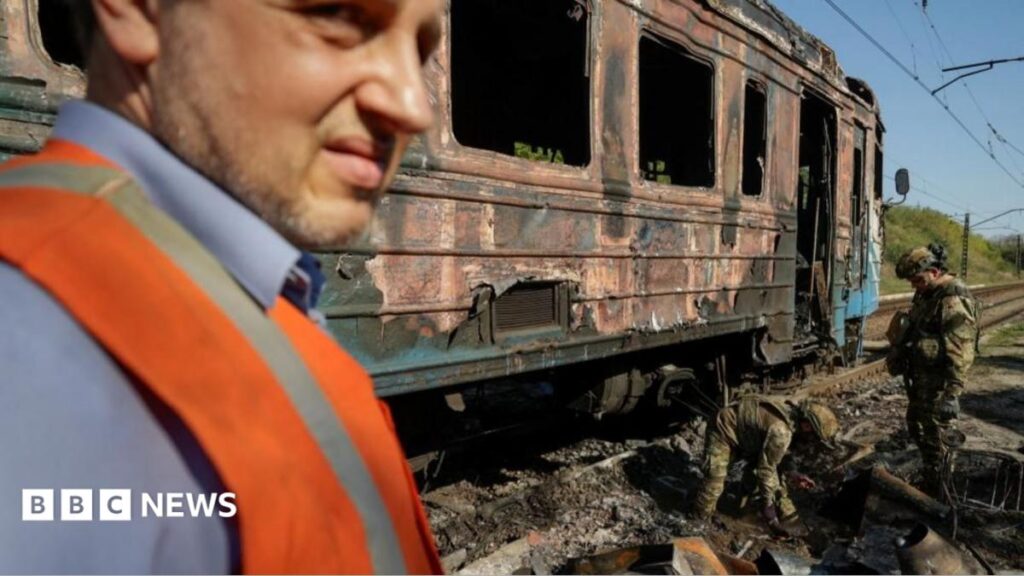
In early October 2026, Russian forces deployed swarms of Shahed‑136‑type drones against key junctions in the central and eastern zones. The most notable strike hit the Kremenchuk–Poltava line, where a drone detonated on a passenger carriage, injuring at least twelve people and halting services for three days. Within a week, similar attacks were reported on the Kyiv–Dnipro corridor and the Lviv‑Ivano‑Frankivsk route.
Ukrzaliznytsia’s emergency response team confirmed that the drones are being launched from mobile launch pads near occupied territories, allowing rapid redeployment and making them harder to intercept. According to a senior railway official, the attacks are timed to coincide with peak commuter hours, amplifying fear and forcing passengers to seek alternative, often more expensive, transport.
The pattern mirrors Russia’s broader strategy of using low‑cost, expendable drones to erode civilian morale. Analysts at the International Institute for Strategic Studies note that this tactic is designed to create a “logistical nightmare” for Ukraine, while also stretching its air‑defence budget thin, as each drone can be engaged with costly missile systems.
Human cost: passengers, refugees and diaspora communities
For everyday Ukrainians, the threat has turned a routine journey into a gamble with life and liberty. Families traveling to reunite with relatives in western cities now face long queues for buses, rideshare apps, or informal car pools that charge double the usual fare. A mother from Kharkiv told local radio that she now prefers to walk 15 kilometres to a safer station rather than board a train that could be targeted at any moment.
The diaspora angle is significant. Over 150,000 Ukrainians have migrated to African nations—particularly Kenya, Nigeria and South Africa—over the past decade, many for education or work. Their relatives back home rely on the rail system to send money and parcels. Disruptions delay remittances and increase the cost of sending goods, tightening the financial lifeline that supports these diaspora families.
Humanitarian NGOs that operate cross‑border aid convoys also feel the pinch. Several African‑run charities delivering medical supplies to conflict‑hit zones use Ukrainian rail to move cargo to the Black Sea ports. The recent strikes have forced them to reroute shipments by road, raising costs by up to 40 % and slowing delivery times for essential medicines.
Broader implications for African food security and trade
The knock‑on effect on grain exports is the most alarming for African markets. According to the United Nations Food and Agriculture Organization, Ukraine supplies roughly 12 % of Africa’s wheat imports. When rail bottlenecks delay grain reaching the ports of Odesa and Chornomorsk, ships sit idle, and cargoes miss seasonal windows that African importers depend on.
In May 2026, the African Union’s Committee on Food Security warned that prolonged rail disruptions could push wheat prices in East Africa up by 8‑10 %, exacerbating inflation already driven by climate‑related harvest shortfalls. Countries such as Sudan and Ethiopia, already grappling with drought, could see further strain on their food baskets if Ukrainian grain shipments are delayed again.
The situation also highlights a strategic lesson for African nations: the vulnerability of supply chains that depend on single‑point transport corridors. Several governments, including Kenya’s, have begun diversifying grain import routes, negotiating increased rail capacity through Poland and Romania to bypass Ukrainian bottlenecks. This shift may reshape trade patterns for the next decade.
International response and the road ahead
Western allies have condemned the drone attacks as violations of international humanitarian law. In a joint statement on 4 October, the EU, the United States and Canada pledged an additional €250 million for rail reconstruction and air‑defence upgrades focused on protecting civilian infrastructure. The aid includes rapid‑deployment anti‑drone systems that can be mounted on locomotives and station rooftops.
Ukraine’s Ministry of Infrastructure announced a “Rail Resilience Programme” in late September, aiming to reinforce 15 critical bridges and install redundant signalling networks by early 2027. The plan also earmarks training for civilian volunteers to assist in emergency repairs, a model borrowed from community‑based rail maintenance programs in Kenya’s Rift Valley.
Looking forward, experts say the conflict will push Ukraine to accelerate digitalisation of its rail operations. Remote monitoring, AI‑driven threat detection and predictive maintenance could reduce the physical footprint of assets vulnerable to drone strikes. If successful, these innovations may eventually be exported to other African railways seeking to modernise under security constraints.
Quick Answers
How many drone attacks on Ukrainian railways have been reported in 2026?
Ukrzaliznytsia confirmed more than 30 drone strikes on rail lines between January and early October 2026.
What alternatives are Ukrainian passengers using after the attacks?
Most are turning to long‑distance buses, rideshare services and informal car‑pool networks, often at higher cost and with longer travel times.
How do rail disruptions affect African grain imports?
Delays in moving Ukrainian grain to Black Sea ports can push wheat prices in East Africa up by 8‑10 % and strain food‑security budgets.
Source: www.bbc.co.uk




💬 Comments 0