Ukraine strikes Russian refineries, Russia hits Ukrainian pumps – fuel war’s global impact
Background: Energy as a battlefield
Since the invasion began in 2022, both Moscow and Kyiv have repeatedly turned to energy infrastructure as a lever of war. Russia’s vast network of oil refineries and pipelines has long been a source of leverage over Europe, while Ukraine’s dependence on imported fuel makes its own petrol stations vulnerable to disruption.
International law classifies attacks on civilian fuel stations as potentially unlawful, yet the line between civilian and military targets blurs when a country’s logistics and mobility hinge on every litre of gasoline. The pattern of striking fuel sites has accelerated as each side seeks to erode the opponent’s war‑fighting capacity without directly confronting troops.
Escalation: Ukraine’s strikes on Russian refineries
In early August 2026, Ukrainian special forces and drone units launched a coordinated assault on three major refineries in the Volgograd and Krasnodar regions. Satellite imagery confirmed that at least two processing units were temporarily shut down, cutting an estimated 300,000 barrels of crude per day from the Russian output stream.
Ukrainian officials framed the operation as a retaliation for Moscow’s recent grain embargo and a message that Kyiv can hit the economic arteries that fund the Kremlin’s war machine. Analysts at the International Energy Agency warned that the loss of refining capacity could push global fuel prices higher, especially as the world already grapples with post‑pandemic supply chain strain.
Russia’s retaliation on Ukrainian petrol stations
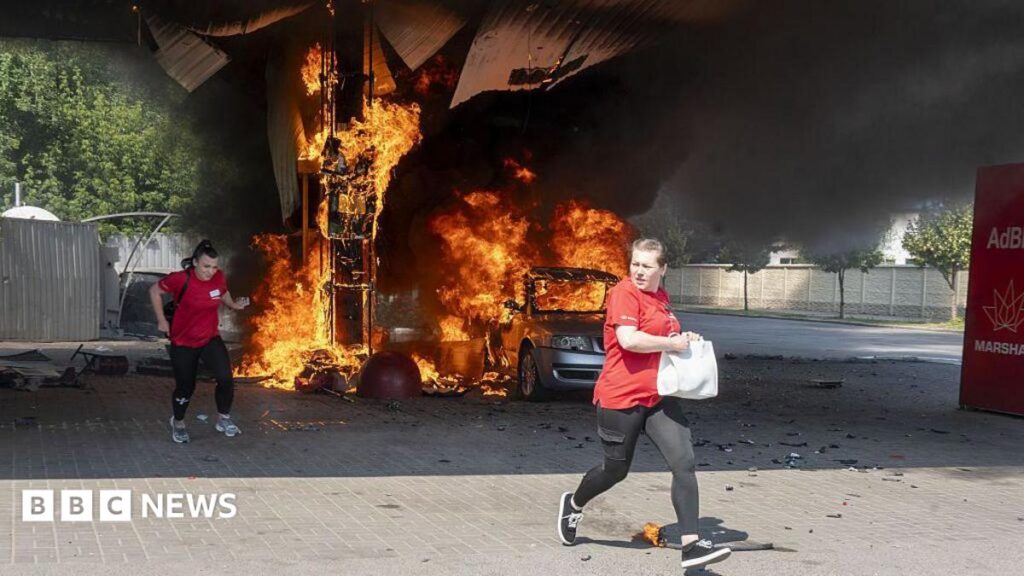
Within days of the refinery attacks, Russian‑aligned militias reported a series of explosions at fuel pumps in the Donetsk and Luhansk regions, as well as in Kyiv’s outskirts. Local media showed smoldering pumps and queues of drivers fleeing the scene, while the Ukrainian Ministry of Energy said the incidents were “deliberate attempts to cripple civilian mobility”.
The strikes have forced fuel companies in Ukraine to advise motorists to avoid lingering at stations, fearing secondary blasts. The Ukrainian government has appealed for international assistance to bolster security at fuel depots, but the rapid pace of the attacks leaves little time for comprehensive protective measures.
Why the fuel war matters beyond the frontlines
Disrupting refineries and petrol stations does more than inconvenience drivers; it directly impacts military logistics, food distribution, and the broader economy. A 10‑percent dip in refinery output can translate into a 3‑5‑percent rise in retail gasoline prices, according to a study by the European Centre for Energy Studies.
Higher fuel costs ripple through transport‑dependent sectors—shipping, aviation, and road freight—raising the price of imported goods. In countries that already face inflationary pressures, such a shock can erode real wages and spark social unrest, a risk that policymakers in Europe and beyond are closely monitoring.
Ripple effects for African economies and diaspora
Africa imports roughly 30 percent of its refined petroleum products, with Russia and the United Arab Emirates among the top suppliers. A sudden reduction in Russian refinery output forces African importers to turn to alternative sources, often at higher prices. In Nigeria, which already battles chronic fuel shortages, the price of gasoline could climb by up to 12 percent in the coming weeks, according to the Nigerian National Petroleum Corporation.
South Africa’s petrochemical sector, heavily reliant on Russian feedstock, may see input‑cost spikes that could delay projects in the plastics and fertilizer industries. The knock‑on effect could raise food prices across the continent, where fertilizer costs already account for a sizable share of agricultural expenses.
For the Ukrainian and Russian diaspora in African cities—particularly in Lagos, Nairobi, and Johannesburg—the fuel war adds a layer of personal anxiety. Community groups have reported heightened concerns about travel safety and the potential for anti‑immigrant sentiment if fuel scarcity fuels broader economic hardship.
What comes next: possible scenarios
If Ukraine continues to target Russian refining capacity, Moscow may respond by intensifying attacks on Ukraine’s civilian fuel network, potentially drawing international condemnation and prompting sanctions on Russian militias. Conversely, a diplomatic push for a cease‑fire on energy targets could emerge if global fuel markets become too volatile for major economies to tolerate.
African nations are likely to hedge their exposure by diversifying import partners and accelerating domestic refining projects. Nigeria’s ongoing refinery modernization programme, for instance, could receive renewed political backing as a strategic buffer against external supply shocks.
The broader lesson for the continent is clear: wars fought over energy can quickly become wars fought over price. Policymakers, investors, and civil society must therefore keep a close watch on how conflict‑driven supply disruptions reverberate through global fuel chains, and prepare contingency plans that protect both economies and the everyday consumer.
Quick Answers
How have the recent attacks on refineries affected global fuel prices?
The loss of about 300,000 barrels per day from Russian refineries has pushed benchmark gasoline prices up by roughly 3‑5 percent worldwide.
What impact could the fuel war have on African gasoline prices?
African importers may face higher costs, leading to an estimated 8‑12 percent rise in gasoline prices in countries like Nigeria and South Africa.
Are there any safety warnings for drivers in Ukraine?
Ukrainian fuel companies have urged motorists to avoid lingering at pumps after a series of bombings at petrol stations.
Source: www.bbc.co.uk




💬 Comments 0