Ukrainian strikes kill six in Russia’s Belgorod region, 14‑year‑old injured – Aug 2026
Background: The Belgorod Frontline and Its Strategic Role
The Belgorod oblast, Russia’s southwestern border with Ukraine, has been a flashpoint since Moscow’s invasion in 2022. The region houses several logistics hubs that supply Russian forces operating in the Donbas, making it a frequent target for Ukrainian artillery and drone raids. Over the past four years, the front line has shifted from a static trench warfare model to a more fluid, cross‑border strike system that relies on precision weapons supplied by Western allies.
Because Belgorod sits only 40 kilometres from the Ukrainian city of Kharkiv, any escalation there reverberates in both capitals. Russian authorities treat civilian casualties in the oblast as a domestic security issue, often linking them to “terrorist” attacks and using them to justify tighter border controls. The acting governor, Vyacheslav Gladkov, regularly briefs the Kremlin on the number of strikes, injuries, and property damage, framing them as evidence of Ukraine’s “aggressive escalation.”
The Recent Strike: What Happened on August 17, 2026
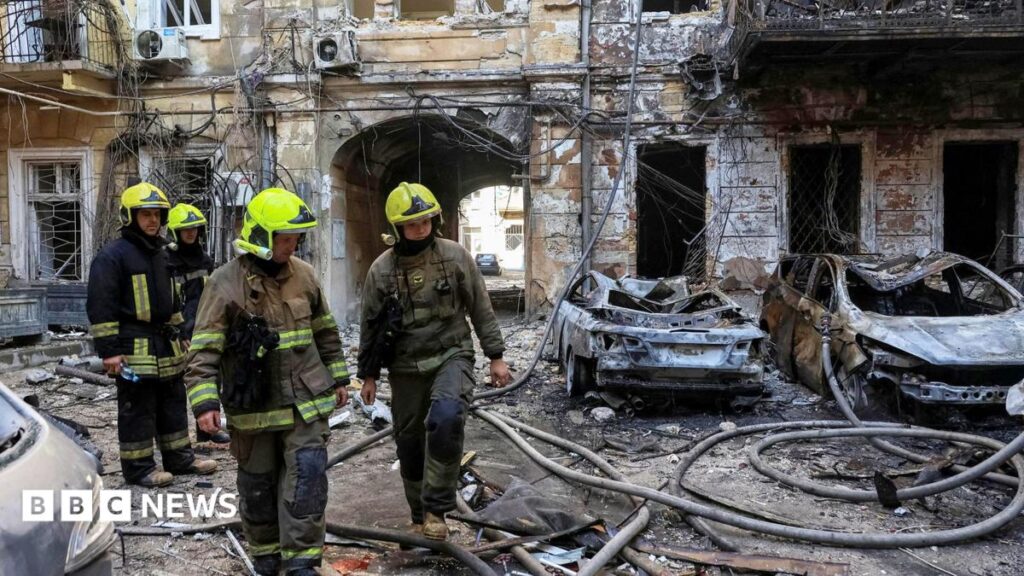
On the afternoon of August 17, a coordinated Ukrainian strike hit a residential area near the town of Shebekino in Belgorod. According to Gladkov’s office, six people were killed, including a 48‑year‑old man, and four others were wounded, among them a 14‑year‑old child who suffered shrapnel injuries. Local emergency services reported that the attack was carried out by a combination of long‑range artillery shells and a small swarm of loitering munitions, a tactic that has become increasingly common in the conflict.
Residents described the sound of explosions as “like a distant thunderstorm” before hearing the impact of the shells. The injured were rushed to the regional hospital, where doctors noted that the child’s condition stabilized after surgery. Ukrainian officials, speaking through their foreign ministry, neither confirmed nor denied responsibility, but a senior spokesman hinted that “any target that supports the war machine is legitimate.”
Why It Matters: Security, Civilian Cost, and Russian Domestic Politics
The strike underscores a growing trend: Ukraine’s ability to strike deep into Russian territory with relatively low‑cost munitions. Each successful raid forces Moscow to divert resources to reinforce border districts, stretching its already thin manpower. Analysts at the European Council on Foreign Relations note that such attacks increase the probability of a broader escalation, as Russian officials may feel compelled to respond with heavier artillery or even limited incursions across the border.
Civilian casualties, especially the involvement of a minor, have a dual impact. Domestically, they feed narratives of a humanitarian crisis that the Kremlin can exploit to rally public support for the war. Internationally, the deaths raise questions about the proportionality of Ukraine’s tactics, a point that Russian diplomats are already using at the United Nations to argue for “protecting Russian civilians.” The incident therefore sits at the intersection of military strategy and information warfare.
African Links: Mercenaries, Arms Deals, and Diaspora Concerns
While the Belgorod strike may appear remote to most African readers, it touches several African interests. First, a number of private military contractors from West Africa, notably former Nigerien and Malian soldiers, have been documented serving in Russian‑backed forces in Ukraine. Reports from the International Crisis Group suggest that the loss of logistics hubs in Belgorod could disrupt supply lines that these mercenaries rely on for pay and equipment, potentially prompting a reshuffle of contracts and a spike in recruitment drives back in Africa.
Second, Russia’s arms export pipeline to Africa—particularly to countries like the Central African Republic, Sudan, and Mozambique—depends on revenues generated from the war. A protracted conflict that forces Russia to allocate more artillery to its own border regions could limit the flow of spare parts and new weapons to African clients, affecting ongoing security operations against insurgencies. Finally, the diaspora angle matters: sizable Ukrainian and Russian communities live in Lagos, Nairobi, and Johannesburg. News of civilian deaths often triggers protests, community vigils, and heightened diplomatic lobbying by diaspora groups that seek to influence their host governments’ positions on the war.
What Comes Next: Possible Russian Response and International Reactions
In the short term, Moscow is likely to increase artillery barrages in the Belgorod sector and may authorize limited incursions into Ukrainian territory near Kharkiv as retaliation. Defense analysts at the Moscow Institute of International Relations warn that such tit‑for‑tat moves risk spiralling into a new front, which could draw in neighboring countries wary of spill‑over, such as Belarus or even Turkey, given its NATO membership and recent diplomatic overtures to Kyiv.
On the diplomatic front, Western governments are expected to reiterate support for Ukraine’s right to self‑defence while urging restraint to protect civilians. The United Nations Human Rights Council is slated to convene a special session on civilian protection in cross‑border conflicts, where the Belgorod incident will likely be cited. For African states, the session presents an opportunity to press for stricter export controls on weapons that fuel the war, a request that may gain traction as the continent grapples with its own arms‑proliferation challenges.
Quick Answers
How many people were killed in the August 17 Belgorod strike?
Six civilians were reported dead, including a 48‑year‑old man.
Why does the Belgorod region matter in the Ukraine‑Russia conflict?
It hosts key logistics hubs that supply Russian forces, making it a frequent target for Ukrainian cross‑border attacks.
What impact could the strike have on African mercenaries in Ukraine?
Disruption of supply lines in Belgorod may affect pay and equipment for West African contractors serving Russian‑backed units, possibly prompting new recruitment drives in Africa.
Source: www.bbc.co.uk




💬 Comments 0