Unprecedented Rain in Japan 2026 Kills Eight, Strands 7,000 at Narita Airport
Background: Japan’s Climate and Infrastructure
Japan sits on the Pacific Ring of Fire, a zone that brings both seismic activity and a climate prone to heavy monsoon rains. While the country has long invested in flood defenses and early‑warning systems, the intensity of precipitation has been rising in recent years, a trend climate scientists link to global warming. The Japan Meteorological Agency classifies the June‑July period as the country’s “rainy season,” but records show that the volume of water falling in short bursts has been climbing steadily since the early 2010s.
Tokyo’s sprawling urban landscape, with its mix of high‑rise districts and low‑lying neighborhoods, makes it especially vulnerable when drainage capacity is overwhelmed. The city’s 2020 Olympics prompted upgrades to several river channels, yet many older districts still rely on century‑old culverts that can’t cope with the sudden deluge of water that hit the capital this week.
The broader Asian region has also seen a spike in extreme weather events, from South Korea’s record floods in 2023 to China’s devastating typhoons in 2025. Experts argue that these incidents are not isolated, but part of a larger pattern of climate‑driven disruptions that threaten economic stability across the continent.
The Event: Unprecedented Rain, Power Outages, and Airport Chaos
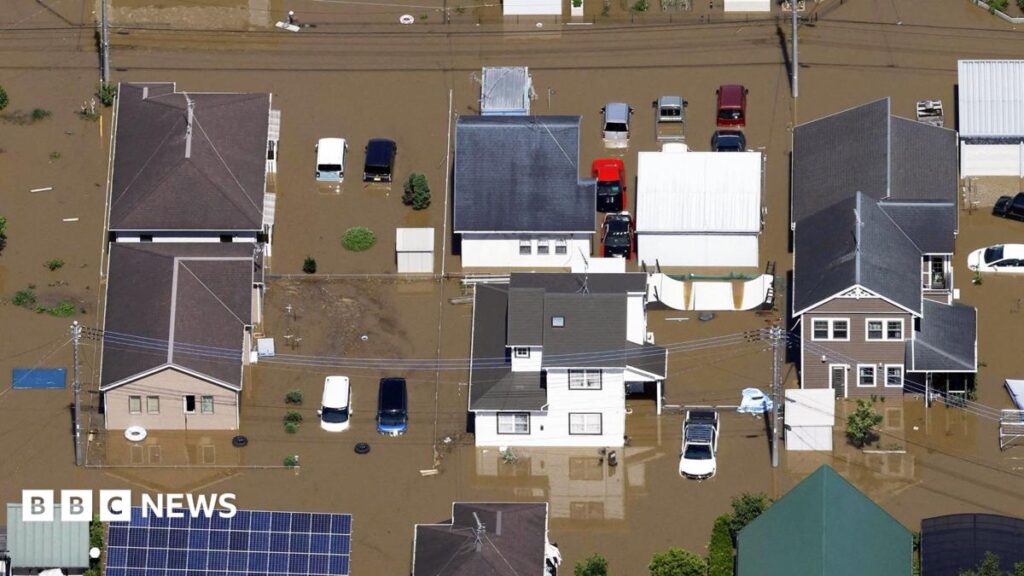
On Tuesday, a slow‑moving low‑pressure system slammed the Kanto region with more than 300 mm of rain in 24 hours, a volume that exceeds the historical average for the entire month. The downpour triggered flash floods across central Tokyo and neighboring prefectures, knocking out electricity for over 20,000 households. Utility companies reported that the surge overloaded substations that had not been upgraded since the early 2000s.
At Narita International Airport, the nation’s busiest hub for international flights, the storm caused a cascade of cancellations and delays. Roughly 7,000 passengers found themselves stranded in the terminals, many of whom were on connecting flights to Africa, the Middle East, and Europe. The airport’s backup generators kicked in, but the sheer number of grounded aircraft strained the capacity of the airport’s emergency shelters.
The death toll rose to eight by evening, with officials confirming that all fatalities were linked to drowning or injuries sustained during the sudden flash floods. Local authorities opened multiple shelters and dispatched rescue teams equipped with inflatable boats to retrieve residents trapped in flooded neighborhoods.
Why It Matters: Economic Ripples Beyond Japan’s Borders
Japan is a key supplier of high‑tech components to African manufacturers, especially in the automotive and renewable‑energy sectors. The temporary shutdown of factories in the Kanto region, combined with disrupted logistics from Narita, is expected to delay shipments of semiconductors and solar inverters destined for markets in Kenya, Nigeria, and South Africa. Analysts at Bloomberg estimate a short‑term supply‑chain gap of up to $150 million for the quarter.
Tourism is another vulnerable sector. Japan attracted over 300,000 African visitors in 2025, many of whom travel via Narita. The airport’s paralysis not only forced cancellations but also dented confidence among travel agencies that book group tours for African students and professionals. A tentative survey by the African Travel Association suggests a 12 % dip in bookings for the next two months as travelers reassess risk.
Beyond direct trade, the event underscores a growing awareness among African investors about climate risk. Venture capital funds that have stakes in Japanese‑backed clean‑tech startups are now re‑evaluating their exposure to extreme‑weather disruptions, a conversation that mirrors similar concerns in West Africa after the 2024 Sahel floods.
Connecting the Dots: A Shared Climate Challenge for Africa and Japan
The Japanese storm is part of a global uptick in extreme precipitation, a pattern that African nations are experiencing on a different scale. In 2025, Ethiopia recorded its worst rainy season in a decade, while Ghana’s coastal towns faced unprecedented river overflows. Both regions share a common shortfall: aging drainage infrastructure that struggles to handle climate‑induced surges.
What makes the Japanese case instructive for African policymakers is the blend of high‑tech early‑warning systems and community‑level response plans. While Africa’s early‑warning networks are expanding, they often lack the integration with power utilities that Japan has cultivated. A joint research initiative announced in Nairobi last month between the African Development Bank and Japan’s Ministry of Land, Infrastructure, Transport and Tourism aims to pilot sensor‑based flood monitoring in Lagos and Accra, drawing lessons from Japan’s recent experience.
The diaspora angle also matters. Over 30,000 Nigerians live in Japan, many working in the automotive and tech sectors. The storm forced many of them to seek temporary accommodation, highlighting the need for better emergency support structures for expatriate communities. Nigerian student groups in Tokyo have already started a petition for a dedicated emergency helpline that could serve both locals and foreign residents in future crises.
What’s Next: Recovery, Policy Shifts, and Long‑Term Resilience
In the immediate aftermath, the Japanese government pledged ¥150 billion (about $1.1 billion) for rapid repair of damaged power lines and to reinforce flood barriers along the Arakawa River. The Ministry of Land also announced a review of building codes for low‑lying residential blocks, aiming to tighten requirements for waterproof basements and elevated utilities.
For African partners, the focus will be on diversifying supply routes. Companies that rely heavily on Japanese components are accelerating talks with manufacturers in Taiwan and South Korea to hedge against future disruptions. Meanwhile, African airlines are negotiating contingency clauses with Japanese carriers to protect passengers from prolonged airport shutdowns.
Long‑term, the episode adds pressure on both continents to accelerate climate‑adaptation financing. The World Bank’s Climate Investment Funds have earmarked an additional $500 million for joint Japan‑Africa flood‑resilience projects, a move that could translate into more resilient infrastructure, better data sharing, and, ultimately, fewer lives lost when the next storm hits.
Quick Answers
How many people were stranded at Narita Airport during the Japan rainstorm?
About 7,000 passengers were left stranded at Narita International Airport as flights were cancelled.
What impact could the Japanese floods have on African markets?
Delays in shipments of Japanese semiconductors and solar inverters could create a short‑term supply‑chain gap worth up to $150 million for African manufacturers.
Are there any plans for Japan‑Africa cooperation on flood resilience?
Yes, a joint research initiative launched in Nairobi aims to pilot sensor‑based flood monitoring in Lagos and Accra, using Japan’s early‑warning technology.
Source: www.bbc.co.uk




💬 Comments 0