US helicopter disables Panama‑flagged cargo ship in Gulf of Oman, engine hit – 2026 maritime showdown
Background: Rising maritime tension in the Gulf of Oman
The Gulf of Oman sits at the crossroads of the world’s most vital oil and container shipping lanes. Over the past decade, Iran’s periodic threats to close the Strait of Hormuz have forced navies and commercial fleets to adapt routes, increase insurance premiums, and sometimes reroute cargo through longer, costlier paths. In 2024, the United Nations recorded a 12% rise in shipping insurance rates for vessels transiting the Gulf, a clear signal of growing risk perception among shippers.
U.S. Central Command (CENTCOM) has maintained a forward‑deployed presence in the region, conducting patrols and surveillance missions to deter Iranian attempts to disrupt commerce. The United States has previously warned that any hostile act against neutral shipping could trigger a calibrated response, a policy reiterated after the 2023 seizure of a Japanese tanker near the Strait. This backdrop set the stage for the latest encounter involving a civilian cargo ship.
The incident: US helicopter strikes Panama‑flagged cargo vessel
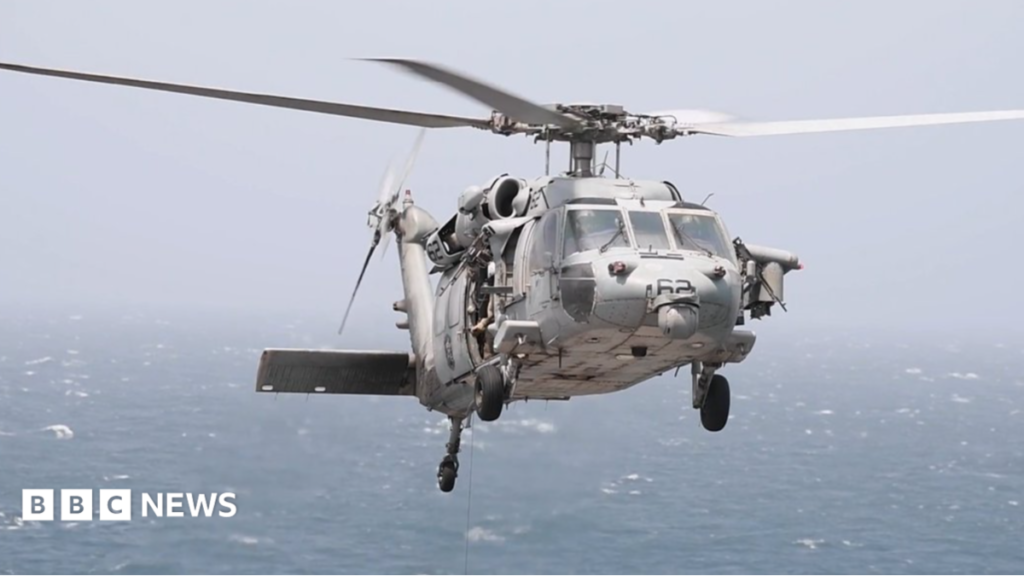
On 10 August 2026, a U.S. Marine‑corps‑operated MH‑60 Seahawk launched a precision missile that struck the engine room of a Panama‑flagged bulk carrier sailing under the name MV Alma Rosa. CENTCOM released a brief statement confirming the hit, describing it as a “targeted disabling action” intended to prevent the ship from being commandeered or used as a bargaining chip in Iran’s broader blockade strategy.
The vessel, carrying 20,000 metric tons of steel billets from China to Dubai, reported a loss of propulsion within minutes of the strike. Crew members activated emergency protocols, and the ship was later towed to a nearby anchorage by a U.S. Navy salvage tug. No fatalities were reported, though two engineers suffered minor injuries from the explosion in the engine compartment.
Why the US action matters for global trade and African economies
Disabling a cargo ship in the Gulf of Oman reverberates far beyond the immediate tactical gain. The Gulf handles roughly 30% of the world’s oil shipments and a comparable share of container traffic linking Asia, Europe, and Africa. Any disruption forces carriers to reroute around the Cape of Good Hope, adding up to 15 days to a voyage and inflating freight costs by $200,000 per vessel, according to data from the International Maritime Organization.
African oil exporters, especially Nigeria and Angola, rely heavily on the Gulf corridor to deliver crude to European refineries. A prolonged blockage would push Nigerian crude onto longer routes, eroding profit margins and potentially prompting a shift toward alternative markets such as West Africa’s emerging LNG hubs. Shipping companies based in Kenya and South Africa, which have been expanding their fleets to capture intra‑African trade, also watch Gulf stability closely because higher freight rates ripple through the entire global supply chain.
Pattern of US‑Iran maritime confrontations and the broader security landscape
The August 2026 strike follows a series of naval incidents that have become almost routine since the 2019 U.S. withdrawal from the Iran nuclear deal. In 2022, a U.S. destroyer fired warning shots at an Iranian fast‑boat that approached a commercial tanker, and in 2025 a U.S. drone allegedly disabled a suspected Iranian minelayer near the Strait. Analysts at the Atlantic Council note that these “graduated responses” are designed to signal resolve without escalating into full‑scale conflict.
Experts also point to a growing reliance on unmanned and remotely piloted weapons in maritime security. The missile used on the MV Alma Rosa was reportedly a precision‑guided, low‑collateral‑damage munition, reflecting a shift toward minimizing civilian casualties while still delivering a decisive tactical effect. This trend raises questions about the future rules of engagement at sea and the legal frameworks governing attacks on neutral vessels.
Reactions and the road ahead for shipping routes
Iran’s foreign ministry condemned the strike as an “unlawful act of aggression,” demanding an investigation at the United Nations Security Council. The statement, released on state television, warned that Tehran would consider “reciprocal measures” if U.S. forces continue to intervene in what it calls Iranian waters. Meanwhile, the International Chamber of Shipping called for an immediate de‑escalation, urging all parties to respect the safety of civilian navigation.
For ship owners and charterers, the incident is a reminder to reassess risk‑mitigation strategies. Many are now purchasing supplemental war‑risk coverage and exploring the use of armed security teams aboard high‑value cargoes. African logistics firms, in particular, are lobbying regional bodies such as the African Union’s Continental Free Trade Area (AfCFTA) to develop alternative maritime corridors that reduce dependence on the Gulf, including potential investments in West African deep‑water ports.
Quick Answers
What cargo was the Panama‑flagged ship carrying when it was hit?
The MV Alma Rosa was transporting about 20,000 metric tons of steel billets from China to Dubai.
How could the Gulf of Oman incident affect African oil exporters?
A disruption could force Nigerian and Angolan crude onto longer routes around Africa, raising shipping costs and potentially shifting export markets.
Is this the first time the US has used a helicopter to disable a civilian vessel in the Gulf?
No, the US has previously conducted targeted disabling actions, such as the 2025 drone strike on a suspected Iranian minelayer, but this is the first confirmed helicopter‑launched missile against a neutral cargo ship.
Source: www.bbc.co.uk




💬 Comments 0