US Marine arrested for murder of Japanese woman in Okinawa sparks 2026 US‑Japan protest
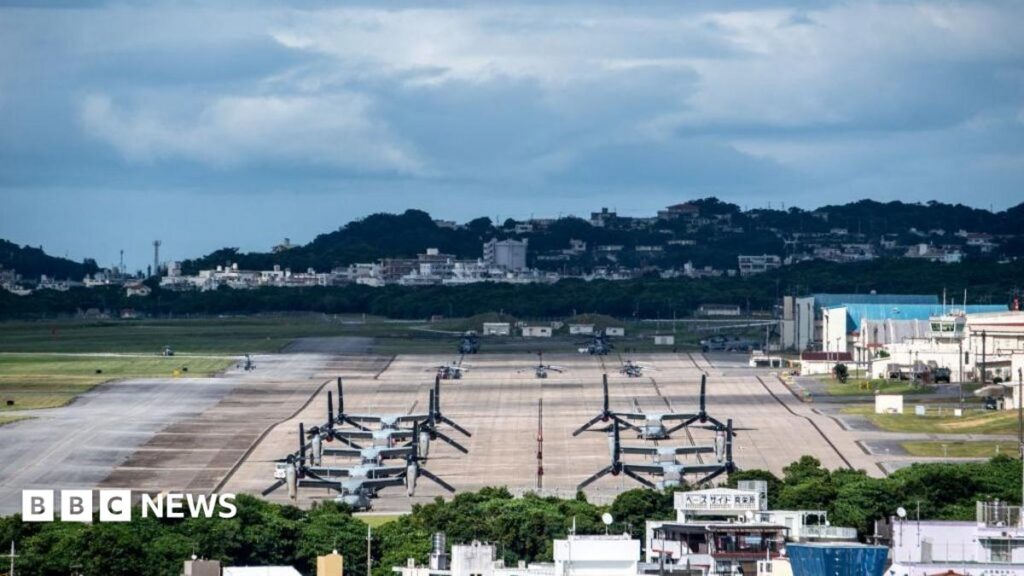
Background: US bases and past controversies in Okinawa
Okinawa hosts roughly 70 percent of the United States' military footprint in Japan, a legacy of the post‑World War II security arrangement that has long been a source of friction with the island’s residents. The presence of more than 50,000 American service members and civilian staff has brought both economic benefits and a steady stream of high‑profile incidents, ranging from traffic accidents to violent crimes, that fuel local opposition.
Over the past two decades, several cases involving US personnel have sparked massive protests, most notably the 1995 rape of a 12‑year‑old Okinawan girl by three Marines, which led to a year‑long occupation of the U.S. base in Kadena and a reevaluation of the Status of Forces Agreement (SOFA). These events have entrenched a narrative that the U.S. military operates with a degree of legal insulation that the local population finds unacceptable.
The Japanese central government, while generally supportive of the US‑Japan security alliance, has increasingly faced pressure from Okinawan officials to hold the United States accountable for the actions of its service members. This tension set the stage for the swift diplomatic response to the latest incident involving a Marine accused of murder.
The murder case and immediate fallout
In early October 2026, a 28‑year‑old Japanese woman was found dead in a residential district of Naha, Okinawa. Police identified the suspect as Private First Class Michael J. Thompson, a United States Marine stationed at Camp Foster. Thompson was taken into custody by Japanese authorities on suspicion of murder, marking one of the most serious crimes attributed to a US service member on the island in recent memory.
Japan’s Ministry of Foreign Affairs lodged a formal protest with Washington on October 3, demanding that senior US military officials intervene and ensure that the case proceeds transparently under Japanese jurisdiction. The protest cited the SOFA, which allows Japanese police to detain and question US personnel, but also underscores the expectation that the United States will cooperate fully and not impede the investigation.
Local activist groups, including the Okinawa Residents' Association, organized a rally in Naha the same day, chanting “Justice for the victim, not immunity for the Marine.” The protest drew an estimated 5,000 participants, reflecting deep‑seated anger over perceived impunity for foreign troops and a broader demand for respect of Okinawan sovereignty.
Why the incident matters for US‑Japan security ties
The murder case arrives at a delicate moment for the US‑Japan alliance, which is increasingly focused on countering China’s growing influence in the Indo‑Pacific. Any deterioration of trust between the two partners could complicate joint exercises, intelligence sharing, and the strategic positioning of forces in the region.
Washington’s response will be closely watched. If the Pentagon moves quickly to cooperate with Japanese authorities and signals a willingness to impose internal disciplinary measures, it could mitigate the diplomatic fallout. Conversely, a perceived lack of cooperation might embolden local opposition, prompting Okinawan officials to demand a reduction of US troops—a scenario that would force Washington to reconsider its force‑allocation strategy across the Pacific.
Analysts at the Japan Institute of International Affairs note that repeated incidents erode the “soft power” advantage the United States enjoys in Japan. They argue that beyond the immediate legal case, the incident could influence public opinion polls that already show a majority of Okinawans favoring a substantial drawdown of US forces.
Broader implications: military accountability and public sentiment
The Thompson case adds to a pattern of crimes by US service members abroad that have sparked calls for reform of the SOFA. Critics argue that the agreement’s provisions on jurisdiction and evidence handling create loopholes that can shield personnel from full accountability, a point repeatedly raised by human‑rights NGOs in both Japan and the United States.
In the United States, the Department of Defense has recently launched a review of its overseas conduct policies, aiming to tighten disciplinary procedures and improve cultural‑sensitivity training. If the review leads to concrete policy changes, it could set a precedent for other host nations that have long complained about the same issues, from South Korea to Germany.
For the Okinawan diaspora living in the United States, the incident reverberates as a reminder of how overseas incidents can affect perceptions of safety and belonging. Community leaders in Little Tokyo, Los Angeles, and other Japanese‑American enclaves have expressed solidarity with the victim’s family, while also urging US officials to demonstrate that justice is served, regardless of nationality.
What could happen next: legal, diplomatic and strategic outcomes
Legally, Thompson will face trial under Japanese criminal law, which carries a potential life sentence for murder. The US government has pledged to provide consular assistance, but under SOFA, the Japanese courts retain primary jurisdiction. The outcome of the trial will likely set a benchmark for how future cases are handled.
Diplomatically, Tokyo may press for a formal apology from the Pentagon and could request a temporary suspension of certain training activities at Camp Foster pending the trial’s conclusion. Such a move would echo the 2016 suspension of live‑fire drills after a separate assault case, signaling that Japan is willing to leverage its partnership to demand higher standards of conduct.
Strategically, the United States may accelerate its ongoing negotiations to relocate some of its Okinawan forces to other bases in the Pacific, such as Guam or Hawaii. While the relocation process is already underway, heightened public pressure could accelerate timelines, reshaping the regional security architecture in ways that affect not only East Asia but also African nations that rely on US naval presence for anti‑piracy patrols in the Indian Ocean.
Quick Answers
What charges does the US Marine face in the Okinawa murder case?
Private First Class Michael J. Thompson has been charged with murder under Japanese law and faces a potential life sentence if convicted.
How does the Status of Forces Agreement affect the investigation?
The SOFA allows Japanese police to detain and interrogate US service members, but the United States must cooperate and can request consular access for its personnel.
Could this incident lead to a reduction of US troops in Okinawa?
If diplomatic tensions rise, Japan may push for a drawdown or temporary suspension of activities at Camp Foster, influencing broader US force‑rebalancing plans in the Indo‑Pacific.
Source: www.bbc.co.uk

💬 Comments 0