US strikes three Iranian oil tankers after warship attack, sparking Gulf security concerns for African oil imports in 2026
Background: A fragile truce in the Strait of Hormuz
For months the United States and Iran have been locked in a tense stand‑off in the Persian Gulf, a region that funnels roughly 20 percent of the world’s oil through the Strait of Hormuz. After a brief lull in early August 2026, both sides resumed aggressive posturing, with Iranian Revolutionary Guard vessels shadowing US warships and the US Navy conducting freedom‑of‑navigation drills.
The latest flare‑up began when US destroyers reported being targeted by what they described as “small, fast‑moving craft” near the Gulf’s southern entrance. Washington’s official statement framed the incident as an unprovoked attack on its naval assets, prompting a swift retaliatory response.
What happened: Three Iranian tankers hit by US missiles
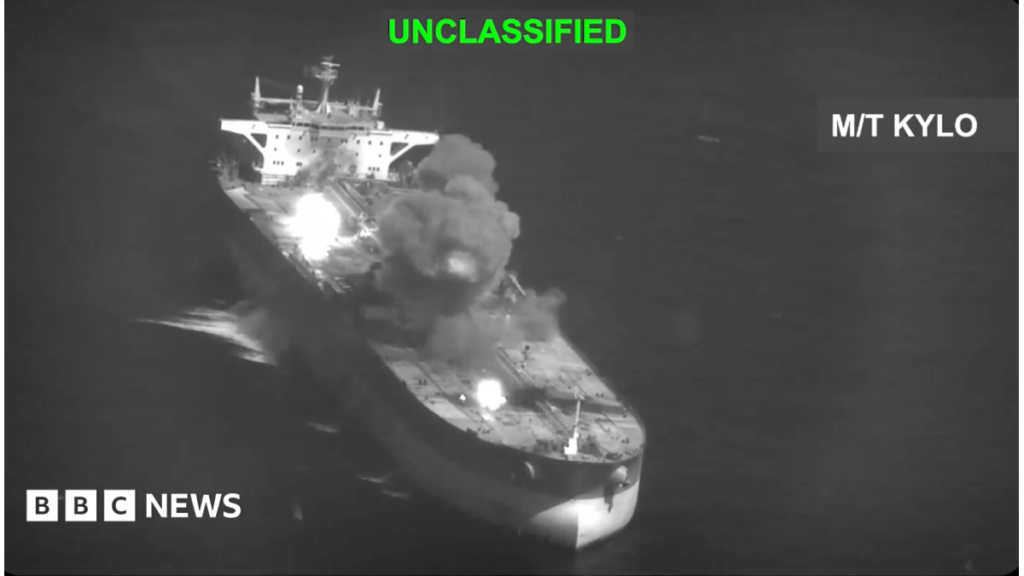
On September 4, 2026, US Navy strike aircraft launched precision missiles at three Iranian‑flagged oil tankers—Alborz 1, Persian Pearl, and Gulf Sultan—each sailing under the Iranian Ministry of Petroleum’s commercial fleet. The strikes were described by the Pentagon as “proportionate retaliation” aimed at neutralising vessels believed to be supporting hostile militia activities.
According to a statement from the US Central Command, the tankers were carrying a combined 1.2 million barrels of crude destined for Asian markets. While none of the ships were sunk, the missile impacts caused significant hull damage, prompting crews to abandon cargo and seek refuge in nearby ports under Iranian control.
Why it matters: Ripple effects on global oil markets and African economies
The immediate consequence of the US strikes was a spike in Brent crude prices, which rose by 2.8 percent within hours of the attack. Analysts note that any disruption in Gulf shipping quickly reverberates through the supply chain, especially for African oil‑importing nations that rely on Gulf‑origin crude to meet domestic demand.
Nigeria, Angola, and Ghana, for example, import roughly 30 percent of their refined‑product needs from the Gulf. Higher freight rates and insurance premiums—already climbing after a series of piracy incidents off the coast of West Africa—could translate into higher pump prices for consumers and tighter margins for local refineries.
African angle: Shipping security, insurance costs and the diaspora’s stake
West African shipowners have long warned that heightened US‑Iran tensions raise the risk profile for vessels transiting the Gulf and the adjacent Atlantic corridors. A spokesperson for the Nigerian Maritime Administration confirmed that insurers are already revising premiums for tankers that call at Nigerian ports, adding up to $150 000 per voyage.
The diaspora community, particularly Iranian and Arab business owners in Lagos and Johannesburg, are watching the developments closely. Many have stakes in joint‑venture refineries that depend on steady crude flows. Disruptions could affect dividend payouts and, by extension, remittance flows that support families back home.
Broader pattern: US naval strategy and Iran’s asymmetric response
The September 2026 strikes fit a broader US strategy of using calibrated force to deter Iranian maritime aggression without escalating to full‑scale war. Since 2024, Washington has conducted over 30 “show‑of‑force” operations in the Gulf, each followed by limited kinetic actions against Iranian assets deemed hostile.
Iran, meanwhile, has increasingly relied on proxy vessels and fast‑attack boats to challenge US presence, a tactic that mirrors its approach in the Red Sea against commercial shipping. This asymmetric playbook makes it harder for the US to identify clear targets, raising the likelihood of miscalculations that could pull in regional actors such as Saudi Arabia or the United Arab Emirates.
What’s next: Diplomatic channels, market adjustments and African preparedness
In the diplomatic arena, the United Nations Security Council is expected to convene an emergency session to discuss the escalation. Both the US and Iran have signaled willingness to engage in back‑channel talks, but analysts caution that any settlement will hinge on broader negotiations over Iran’s nuclear program and US sanctions relief.
For African oil markets, the immediate priority is to secure alternative supply routes. Several West African nations are exploring short‑term contracts with North‑African suppliers and increasing strategic reserves. Meanwhile, regional bodies such as the African Union’s Economic, Social and Cultural Council are urging member states to develop a coordinated response to shipping‑security threats that could affect trade corridors beyond the Gulf.
Quick Answers
Which Iranian oil tankers were hit by the US in September 2026?
The US struck the Iranian‑flagged tankers Alborz 1, Persian Pearl, and Gulf Sultan.
How could the US‑Iran naval clash affect oil prices in Africa?
Disruptions in Gulf shipping raise global crude prices and insurance costs, which can increase fuel prices and import expenses for African countries that rely on Gulf oil.
Are African shipping insurers raising premiums because of the Gulf tensions?
Yes, insurers in Nigeria and other West African nations have added up to $150 000 per voyage for tankers transiting the Gulf after the September 2026 strikes.
Source: www.bbc.co.uk




💬 Comments 0