US threatens isolation over Iran oil ties; China calls 2026 sanctions illegal, affecting Africa
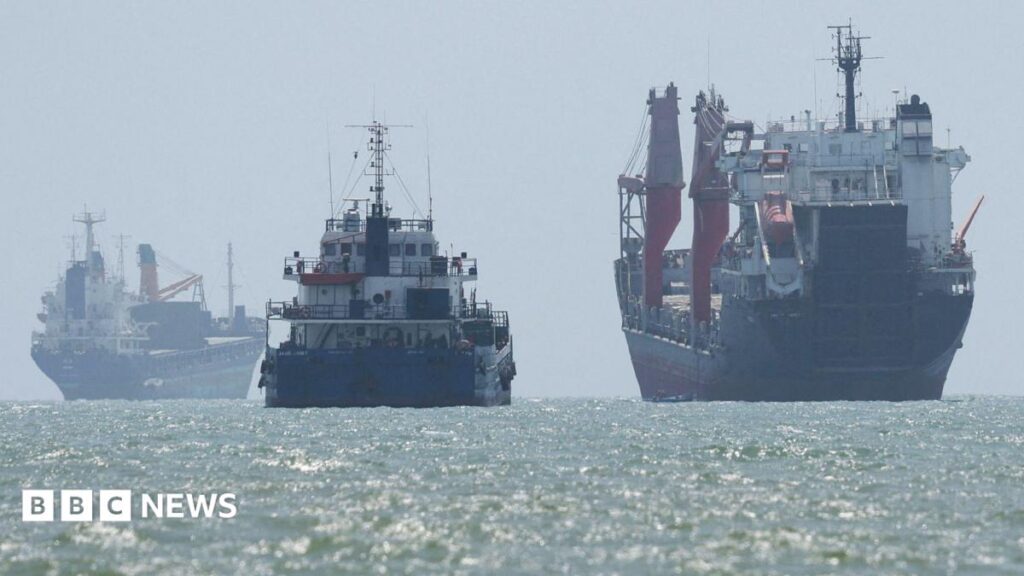
Background: US sanctions, Iran's oil sales and China's role
Since the early 2000s, the United States has used sanctions as a primary lever to curb Tehran's nuclear ambitions and regional influence. Over the years, the sanctions regime has been expanded to target Iran's energy sector, aiming to choke off revenue streams that could fund weapons programs. Despite the pressure, Iran has increasingly turned to China as a reliable buyer of its crude, with Beijing accounting for a sizable share of Iranian oil exports in the past decade.
China's involvement goes beyond simply buying oil; it includes financing, ship-to-ship transfers, and joint ventures that help Iran evade detection by Western monitoring systems. This partnership has been welcomed by Tehran as a lifeline, while Washington views it as a direct challenge to its foreign policy objectives. The tension has simmered for years, but the latest US move marks a significant escalation.
What the new US sanctions cover
In March 2026, the United States announced a fresh round of sanctions that target not only Iranian entities but also any foreign company or country that continues to engage in oil trade with Tehran. The rules forbid U.S. banks from processing payments linked to Iranian oil, and they threaten secondary sanctions against third‑party nations that fail to comply, effectively threatening to cut them off from the American financial system.
The Treasury Department also warned that firms found facilitating the shipment of Iranian crude could face asset freezes and bans on U.S. market access. While the language is similar to earlier measures, the new decree expands the definition of “facilitating” to include indirect services such as ship‑to‑ship transfers in international waters, a practice commonly used by Chinese‑registered vessels.
China's diplomatic pushback
Beijing responded within hours, labeling the sanctions "illegal" and a violation of international trade law. A spokesperson for the Ministry of Foreign Affairs said the United States was overstepping its jurisdiction and interfering with sovereign commercial relations, a claim echoed by senior Chinese officials in state media. The Chinese government also announced that it would consider “counter‑measures” if the sanctions were enforced against Chinese firms.
According to a senior diplomat quoted by Xinhua, China sees the move as an attempt to force it into a geopolitical corner, threatening the broader stability of the global energy market. The official stance frames the sanctions as an affront to the principle of non‑interference, a core tenet of Chinese foreign policy, and signals that Beijing may look to deepen its energy cooperation with Iran as a form of resistance.
Why African oil‑importing nations should care
Several African states, including Nigeria, Angola, and Sudan, have historically bought Iranian oil to diversify their energy supplies and keep costs low. With the United States threatening to isolate any nation that continues such trade, these countries now face a diplomatic dilemma: comply with Washington and risk higher fuel prices, or maintain ties with Tehran and risk secondary sanctions that could affect their access to U.S. banks and markets.
Nigeria, Africa’s largest oil producer, has already signaled a cautious approach. Sources say the Nigerian Ministry of Finance is reviewing the sanctions to gauge potential impacts on its foreign exchange reserves, which are partially backed by oil revenues from a range of sources, including Iran. A similar review is underway in Kenya, where the government has been exploring Iranian crude as a hedge against volatile global oil prices.
Ripple effects on China‑Africa trade corridors
China’s Belt and Road Initiative (BRI) has tied many African economies to Chinese ports, railways, and financing packages. If the United States proceeds with secondary sanctions, Chinese firms operating in Africa could be caught in the crossfire, especially those involved in logistics for oil shipments. A senior analyst at the Africa‑China Business Council warned that “the sanctions could indirectly raise the cost of Chinese‑financed infrastructure projects if banks become wary of any transaction linked to Iranian oil.”
Moreover, several African ports, such as Lagos and Mombasa, serve as transshipment hubs for oil moving from the Middle East to Asia. Any disruption to the flow of Iranian crude could reduce cargo volumes, affecting port revenues and ancillary services. The potential slowdown may also push African exporters to seek alternative routes, reshaping trade patterns that have been stable for the past decade.
What’s next: diplomatic chess and market uncertainty
In the coming weeks, diplomatic channels are expected to heat up. The United States is likely to press allies in the European Union and the Gulf to enforce the sanctions uniformly, while China may rally support from non‑aligned nations, including several African states, to form a counter‑coalition. Experts predict that a multilateral negotiation could emerge, aiming to carve out exemptions for humanitarian fuel or for countries that can prove strict compliance with anti‑money‑laundering rules.
For markets, the immediate effect is heightened volatility in oil prices, as traders factor in the risk of supply disruptions. African stock exchanges that list energy firms may see short‑term dips, while Chinese commodities exchanges could experience a surge in demand for alternative crude sources. The longer‑term picture will hinge on whether the United States follows through with punitive measures or opts for a more nuanced approach that avoids alienating key African partners.
Quick Answers
What do the 2026 US sanctions on Iran prohibit?
They ban U.S. banks from handling payments linked to Iranian oil and threaten secondary sanctions against any foreign entity that continues to trade Iranian crude.
How could African countries be affected by the new sanctions?
African nations that import Iranian oil risk losing access to U.S. financial services or facing higher fuel costs if they comply with the sanctions.
Why is China calling the sanctions illegal?
Beijing argues the measures violate international trade law and the principle of non‑interference, claiming the U.S. is overreaching its jurisdiction.
Source: www.bbc.co.uk




💬 Comments 0