USS Abraham Lincoln crew complaints in 2026 deployment raise concerns for US Africa missions
Background: The carrier’s latest deployment
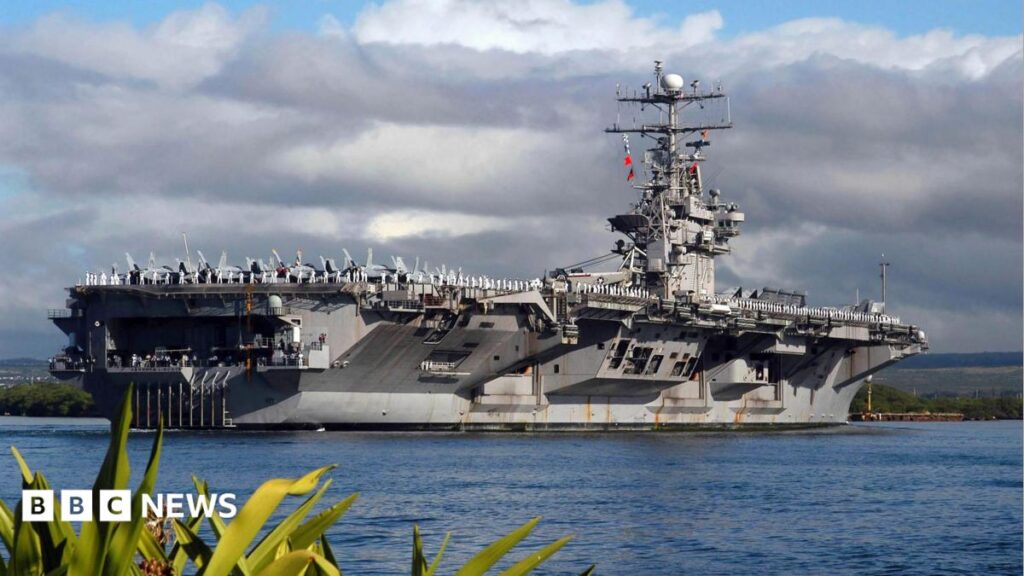
The nuclear‑powered aircraft carrier USS Abraham Lincoln (CVN‑72) set sail on 11 December 2025 for a 10‑month deployment that will see it operate across the Pacific, the Indian Ocean and the Gulf of Guinea. The ship, one of the Navy’s largest warfighting platforms, carries roughly 5,000 sailors, Marines and aircrew, and is a cornerstone of US power projection.
Since the start of the cruise, the carrier has been part of a broader US Indo‑Pacific strategy that also includes a visible presence off West Africa. The vessel has taken part in joint exercises with the Nigerian Navy and conducted anti‑piracy patrols near the Niger Delta, a region where maritime crime has surged in recent years.
These operations are timed to coincide with the US‑Africa Leaders Summit scheduled for early 2027, where Washington hopes to showcase its commitment to security cooperation on the continent. The carrier’s readiness, therefore, is not just a matter of US national security but also a diplomatic signal to African partners.
What sailors are saying: conditions on board
In late July, a series of anonymous messages posted on the military‑focused forum SailorTalk highlighted a range of grievances. Service members described cramped sleeping quarters, limited fresh‑food options, and an over‑taxed HVAC system that struggled to keep the ship’s interior at a comfortable temperature during the tropical stretch near West Africa.
Several crew members also raised concerns about mental‑health support. According to a post attributed to a petty officer, the carrier’s onboard counseling services are understaffed, and many sailors feel reluctant to seek help because of stigma and the perception that “being tough” is required for deployment.
The complaints were amplified when a former ship’s sailor, speaking on condition of anonymity, said that maintenance backlogs have forced the crew to perform “temporary fixes” on critical equipment, a situation that could jeopardise operational safety if not addressed promptly.
Why it matters: readiness and African security
A carrier’s effectiveness hinges on the wellbeing of its crew. When sailors are fatigued, malnourished or mentally strained, the probability of operational errors rises, according to a 2023 RAND study on naval performance. In the context of the Gulf of Guinea, where the Abraham Lincoln is expected to deter piracy and support joint patrols, any dip in readiness could limit the ship’s ability to respond quickly to incidents.
African navies, especially Nigeria’s, have been building capacity through US‑funded programs like the Africa Partnership Station. The carrier’s presence provides a platform for live‑fire drills and air‑support training. If crew morale deteriorates, the quality of these joint exercises could suffer, undermining confidence in the US commitment to regional security.
Moreover, the carrier’s deployment is a key element of the US “Pivot to Africa” strategy, which aims to balance China’s growing influence in ports such as Djibouti and Lagos. A compromised operational tempo on the Lincoln could be interpreted by Beijing and Moscow as a weakening of US resolve, potentially reshaping the geopolitical calculus in West Africa.
A broader pattern: US military welfare and overseas missions
The Abraham Lincoln story is not isolated. Over the past two years, multiple service branches have faced scrutiny over housing shortages, supply‑chain glitches, and mental‑health backlogs. In 2024, the Army’s Fort Bragg reported similar grievances about food quality and counseling access, prompting a Pentagon‑wide review of quality‑of‑life metrics.
Analysts argue that the root cause lies in the rapid expansion of global commitments after the pandemic, which stretched recruitment pipelines and maintenance schedules thin. A 2025 Government Accountability Office (GAO) report warned that without sustained investment in sailor welfare, the Navy could see a “readiness gap” that would affect every theater, from the South China Sea to the Atlantic coast of Africa.
For African partners, the pattern matters because it signals how the US allocates resources across its global footprint. When the Navy prioritises crew welfare, it not only protects its own force but also ensures that joint operations—like anti‑smuggling patrols off Senegal or humanitarian assistance after floods in Ghana—are executed with the highest possible proficiency.
Responses and what could happen next
The Navy’s public affairs office issued a brief statement in early August, acknowledging “ongoing efforts to improve living conditions and mental‑health services aboard USS Abraham Lincoln.” The statement cited a recent upgrade to the ship’s galley refrigeration units and the addition of two extra mental‑health counselors, though it stopped short of confirming the timeline for full implementation.
Congressional oversight committees have scheduled a hearing for September 2026 to examine crew‑wellness on high‑tempo deployments. Lawmakers from the Senate Armed Services Committee have urged the Department of Defense to allocate additional funding for shipboard housing upgrades, a move that could benefit the Abraham Lincoln and other carriers slated for similar itineraries.
If the Navy implements the recommended changes quickly, the carrier could regain full operational capacity before its scheduled return to Norfolk in October 2026. However, persistent issues may force the Navy to reconsider the intensity of future West African deployments, potentially shifting more of the burden to allied navies or to smaller, more agile surface combatants.
Quick Answers
What issues have crew members raised about conditions on USS Abraham Lincoln?
Sailors have reported cramped berths, limited fresh‑food options, an over‑taxed HVAC system, understaffed mental‑health services, and temporary fixes on critical equipment.
How could crew morale on the carrier affect US operations in Africa?
Reduced morale can lower operational readiness, limiting the ship’s ability to conduct anti‑piracy patrols, joint training with African navies, and rapid response to regional crises.
What steps is the US Navy taking to address the concerns?
The Navy announced upgrades to galley refrigeration, added two mental‑health counselors, and is under congressional review for additional funding to improve shipboard living conditions.
Source: www.bbc.co.uk




💬 Comments 0