USS Abraham Lincoln crew faces food shortages and morale crisis after 250‑day deployment, US Navy under fire
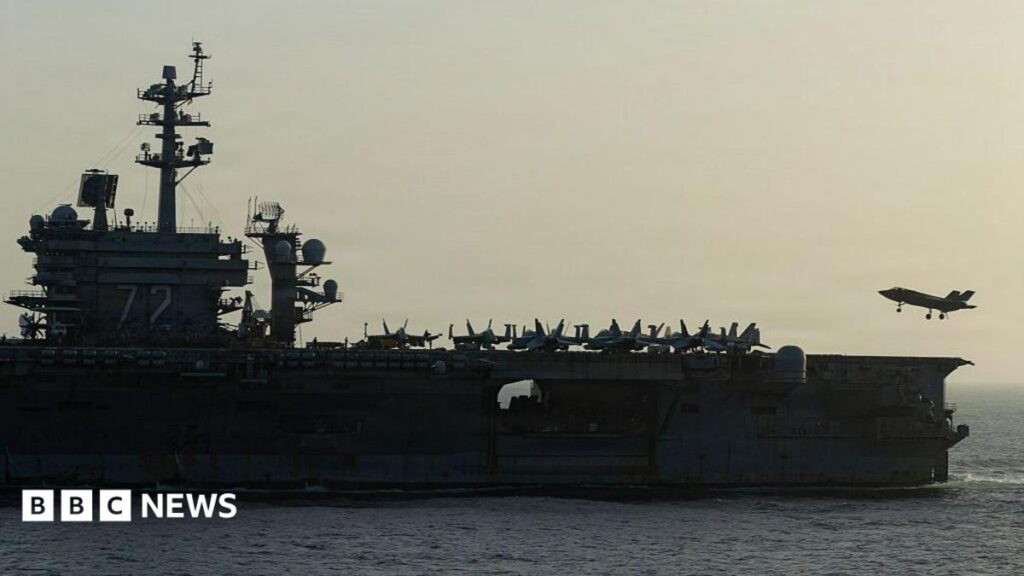
A record‑long stint at sea
The nuclear‑powered aircraft carrier USS Abraham Lincoln (CVN‑72) has been on continuous deployment for more than 250 days, a duration that eclipses the average carrier tour of 180 days. The ship left Norfolk in late February 2025 for a multi‑theater mission that has taken it from the Atlantic to the Mediterranean, the Red Sea and the Indo‑Pacific, supporting everything from air strikes against extremist groups to freedom‑of‑navigation patrols. The extended timeline reflects a broader U.S. Navy strategy of keeping high‑end assets forward‑deployed to counter rising great‑power competition, especially with China and Russia.
The Navy’s own schedule guidelines warn that deployments beyond six months increase the risk of equipment wear and crew fatigue. Yet budget constraints and a shortage of fully crewed surface combatants have forced the service to stretch its carrier rotations. According to a report by the Government Accountability Office, the Navy has not fully replenished its carrier fleet since 2022, leaving fewer ships available to rotate crews in a traditional “home‑port‑away‑port” pattern.
Life aboard: food, plumbing and morale
Sailors on the Abraham Lincoln have described a deteriorating quality of life that includes intermittent food shortages, spoiled provisions and a failing plumbing system that leaves several decks without hot water. A former petty officer, speaking on condition of anonymity, told The Washington Post that “the galley can’t keep up, and the water lines are leaking in the berthing areas.” The ship’s medical staff reportedly logged a spike in minor injuries linked to slips on wet decks and heat‑related illnesses during the heatwave that swept the Mediterranean in June.
The morale impact has been stark. Sources say a small group of enlisted personnel considered jumping overboard during a night watch in early July, a claim that the Navy’s public affairs office has not publicly confirmed but acknowledges that “stress and fatigue are being closely monitored.” The situation has prompted an internal review, with senior officers reportedly ordering extra rations and temporary repairs, yet the underlying logistical bottlenecks remain.
Why the carrier’s condition matters beyond the deck
A carrier’s operational readiness is a barometer for U.S. power projection. When a flagship like the Abraham Lincoln struggles with basic services, its ability to launch and recover aircraft, conduct anti‑submarine warfare or provide humanitarian assistance is compromised. Analysts at the Center for Strategic and International Studies warned that prolonged degradation could erode the Navy’s “force‑in‑being” credibility, especially in contested regions where allies look to the U.S. for security guarantees.
The financial implications are also significant. Repairing a carrier’s internal systems can run into the hundreds of millions of dollars; the Navy’s own cost‑estimate model predicts that each day of delayed maintenance adds roughly $1.2 million in extra expenses. In a fiscal environment where the Pentagon faces a $10 billion shortfall in the 2027 defense budget, such overruns could force cuts elsewhere, potentially affecting programs that support African maritime security, such as the Africa Partnership Station.
African stakes: how carrier fatigue ripples to the continent
The U.S. Navy’s presence in the Red Sea and Gulf of Aden has been a cornerstone of anti‑piracy and counter‑terrorism operations that protect vital shipping lanes off the Horn of Africa. The Abraham Lincoln has periodically provided air cover for the Combined Task Force 151, deterring Somali piracy and escorting humanitarian aid to Yemen. If the carrier’s aircraft sortie rate drops because of crew fatigue or equipment failures, regional partners like Kenya, Djibouti and Ethiopia could see a gap in aerial surveillance that emboldens illicit actors.
Moreover, African‑American sailors make up a disproportionate share of enlisted personnel on board U.S. carriers. According to Navy personnel data, roughly 20 percent of the Abraham Lincoln’s crew identify as Black, many of whom have family ties to the African diaspora. Their welfare on a ship that is effectively a floating community matters not only for morale but also for recruitment pipelines that the Navy relies on to maintain diversity. A high‑profile crisis could deter prospective recruits from African‑American communities, tightening an already strained talent pool.
What’s next: investigations, policy tweaks and congressional oversight
In response to the mounting reports, the Navy announced on August 10 that an independent board will conduct a full audit of the Abraham Lincoln’s supply chain, maintenance schedule and crew welfare protocols. The board’s charter includes recommendations on rotating crews more frequently and establishing “well‑being hubs” on carriers to address mental‑health concerns. Sources say senior leadership is also reviewing the possibility of deploying a second carrier to share the operational load in the Indo‑Pacific, a move that would free up the Abraham Lincoln for a shorter, more sustainable deployment.
Congressional committees are expected to hold hearings in the coming weeks. The House Armed Services Committee’s subpanel on naval affairs has already sent a letter to the Secretary of the Navy requesting a detailed briefing on the carrier’s condition and the projected cost of remedial actions. If lawmakers deem the situation a systemic failure, they could push for legislation that caps deployment lengths at 180 days unless an emergency is declared, echoing a similar measure passed after the 2017 USS Bonhomme Richard fire.
Quick Answers
How long has the USS Abraham Lincoln been deployed?
The carrier has been at sea for more than 250 days, far exceeding the typical 180‑day deployment window.
What problems are sailors facing on the ship?
Crew members report food shortages, broken plumbing, limited hot water and heightened stress, with some considering extreme actions.
Why does the carrier’s condition matter to Africa?
The Abraham Lincoln supports anti‑piracy and humanitarian missions in the Red Sea and Gulf of Aden; any reduction in capability could affect security and trade routes vital to African nations.
Source: www.bbc.co.uk




💬 Comments 0