USS Lincoln’s 2026 months‑long deployment tracked by satellite – implications for US naval strategy and African maritime security
Background: USS Lincoln and its unprecedented deployment
The nuclear‑powered aircraft carrier USS Lincoln (CVN‑72) set sail in early 2026 for what analysts now describe as one of the longest continuous deployments in its class. Originally slated for a six‑month rotation in the Indo‑Pacific, the ship’s itinerary was extended to cover the Indian Ocean, the Red Sea, and the Gulf of Guinea, keeping it at sea for more than nine months without returning to a home port. The decision, announced by the U.S. Navy in March, was framed as a response to rising tensions in the Indo‑Pacific and a need to reassure allies across three continents.
The carrier’s complement includes roughly 5,000 sailors, 70 aircraft, and a forward‑deployed strike group that can project power over a radius of several thousand kilometres. While the U.S. has routinely kept carriers on station for extended periods, Lincoln’s itinerary is notable for its focus on maritime chokepoints that sit near several African nations, such as the Bab‑el‑Mandeb and the Gulf of Guinea’s oil‑rich waters. The extended stay has raised questions about crew welfare, maintenance cycles, and the strategic calculus driving the deployment.
Satellite sleuthing: How BBC Verify mapped the ship’s movements
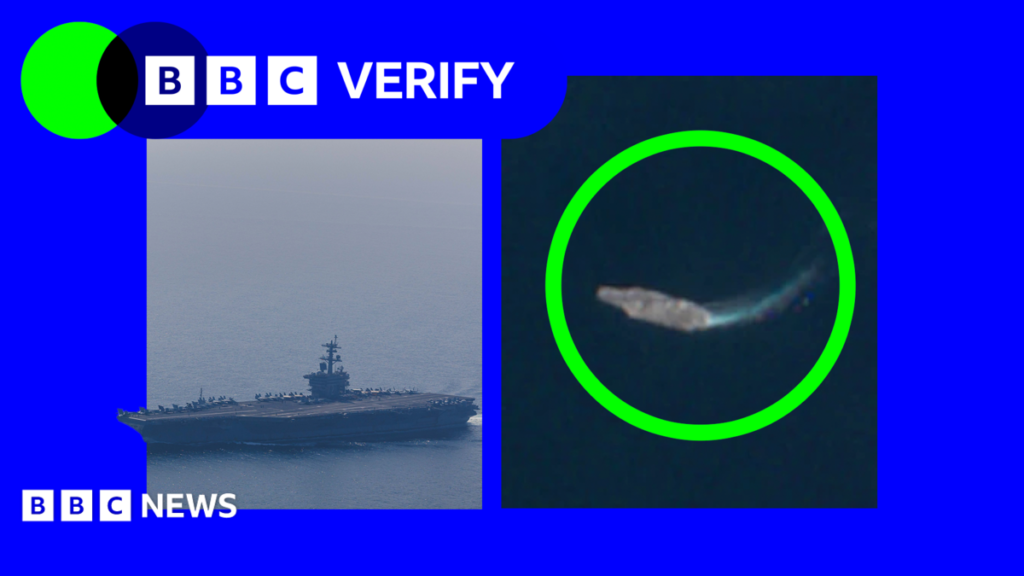
BBC Verify turned to commercial satellite imagery to trace Lincoln’s path after official logs became sparse. By analysing high‑resolution optical and radar data released by providers such as Maxar and Planet, the team identified the carrier’s positions at two‑day intervals, noting its anchorage near Djibouti in June and its later appearance off the coast of Lagos in August. The imagery also revealed the presence of support vessels, replenishment oilers, and a flotilla of destroyers that accompanied the carrier group.
The verification process involved cross‑checking satellite timestamps with open‑source AIS (Automatic Identification System) feeds, which occasionally mask military movements for security reasons. According to BBC Verify, the satellite evidence showed Lincoln operating at a slower speed than typical combat patrols, suggesting a focus on surveillance and diplomatic port calls rather than high‑intensity exercises. This method of open‑source intelligence (OSINT) underscores how civilian satellite constellations are reshaping the transparency of naval operations.
Strategic stakes: Why the deployment matters for US power projection
From Washington’s perspective, keeping a carrier in the Indian Ocean and adjacent waters serves several intertwined goals. First, it signals to China and its regional allies that the United States can sustain a forward presence far from its Pacific bases. Second, it reassures partners like Australia, Japan, and India that the U.S. will continue to guarantee freedom of navigation in contested seas such as the South China Sea. Third, the carrier’s proximity to the Red Sea and Gulf of Guinea allows the U.S. to monitor the flow of oil and other commodities that are vital to global markets.
Critics argue that the extended deployment stretches the Navy’s maintenance schedule and places undue strain on sailors who have been at sea for months beyond the usual rotation. A senior officer, speaking on condition of anonymity, told Reuters that “the wear‑and‑tear on a carrier’s flight deck and propulsion system grows exponentially after six months without a dry‑dock.” The strategic payoff, however, is seen as outweighing the logistical costs, especially as the U.S. seeks to counter not only Chinese maritime influence but also the growing presence of Russian and Iranian vessels in the same waters.
African maritime implications: Shipping lanes, piracy, and regional navies
The Gulf of Guinea, stretching from Ghana to Nigeria and beyond, handles roughly 12 % of global oil shipments, according to the International Maritime Organization. Lincoln’s appearance near Lagos in August therefore carries weight for African economies that depend on secure sea lanes. While the carrier itself does not conduct anti‑piracy patrols, its accompanying destroyers and maritime patrol aircraft can deter hostile actors and provide rapid response capabilities for distressed vessels.
Regional navies, particularly the Nigerian Navy and the South African Naval Service, have welcomed the added surveillance capacity but also voiced concerns about over‑reliance on foreign forces. A spokesperson for the African Union’s Maritime Security Committee said that “African states must develop indigenous capabilities rather than depend on external carriers that are here for limited windows.” The deployment also coincides with a surge in Chinese shipbuilding contracts for African ports, raising the stakes in a subtle competition for influence over maritime infrastructure.
Reactions and criticisms: Domestic and international viewpoints
In the United States, congressional committees have begun questioning the cost of the prolonged deployment. A letter from the House Armed Services Committee, obtained by The Washington Post, requested a detailed report on the impact of the mission on crew health, maintenance backlogs, and the overall budget. Advocacy groups for military families argue that extended tours increase the risk of mental‑health issues, citing a 2024 study from the RAND Corporation linking deployments longer than six months to higher rates of PTSD among sailors.
Internationally, the deployment has been met with mixed signals. While India’s Ministry of External Affairs praised the “continued commitment to a free and open Indo‑Pacific,” Iran’s foreign ministry condemned the carrier’s presence near the Bab‑el‑Mandeb as “a provocative act that escalates regional tensions.” African leaders, including Kenya’s president, have called for a “balanced approach” that respects sovereign maritime zones while acknowledging the benefits of joint exercises with U.S. forces.
Looking ahead: What the next phase could hold
The Navy’s current plan, as outlined in a June briefing, is to rotate Lincoln back to the Pacific by early 2027, replacing it with a carrier from the Atlantic fleet. However, analysts at the Center for Strategic and International Studies suggest that the U.S. may keep a carrier‑strike group stationed in the Indian Ocean on a more permanent basis, effectively creating a “floating base” that can respond to crises from the Red Sea to the South China Sea.
For African stakeholders, the key question is whether the temporary boost in maritime security will translate into longer‑term capacity building. The U.S. has announced a $150 million maritime partnership program for West African navies, but critics warn that without sustained training and technology transfer, the benefits may be short‑lived. The next few months will reveal whether Lincoln’s mission is a standalone show of force or the first step toward a re‑imagined naval footprint that includes deeper engagement with African maritime partners.
Quick Answers
How long has the USS Lincoln been deployed in 2026?
The carrier has been at sea for more than nine months, making it one of the longest continuous deployments for a U.S. nuclear‑powered carrier.
Why does the USS Lincoln’s presence matter for African shipping routes?
Its proximity to the Gulf of Guinea and the Red Sea helps deter piracy and secures oil‑laden vessels that carry about 12 % of global oil shipments.
What method did BBC Verify use to track the carrier?
BBC Verify analysed commercial satellite imagery and cross‑checked it with AIS data to pinpoint Lincoln’s location and movements.
Source: www.bbc.co.uk




💬 Comments 0