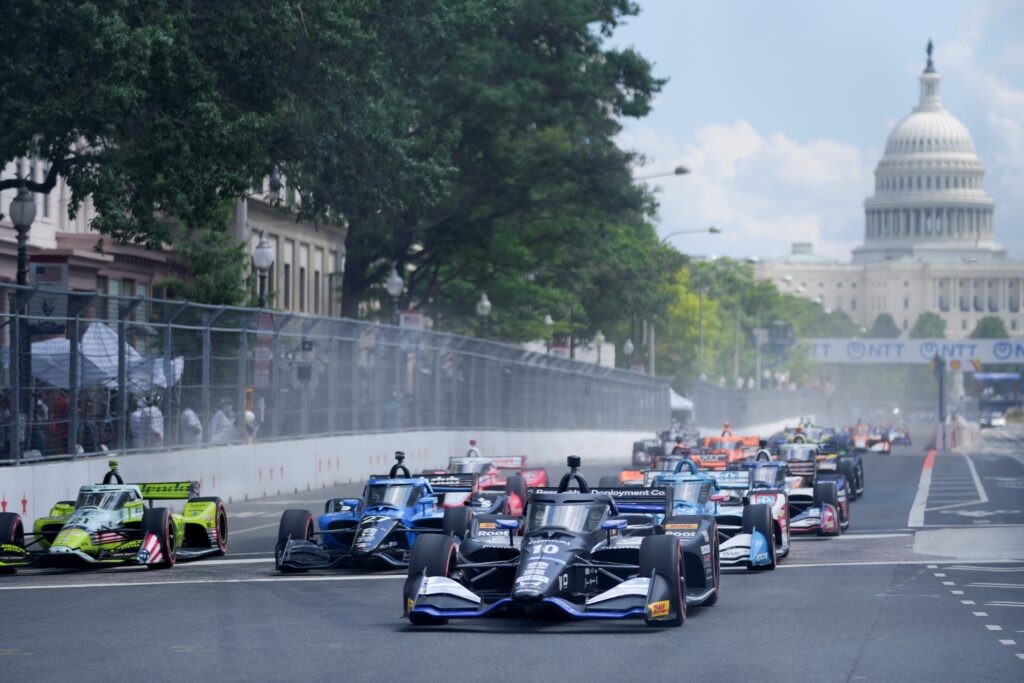
Washington D.C. IndyCar race on the National Mall draws 300,000 fans in historic 2026 debut
Background: IndyCar’s push into city‑center street races
Since the early 2000s, IndyCar has experimented with temporary street circuits to broaden its appeal beyond traditional ovals. The series’ success in downtown Detroit, Long Beach and, more recently, Las Vegas, proved that urban venues could generate high TV ratings and attract sponsors eager to tap into dense populations.
The decision to bring a race to Washington D.C. stemmed from a strategic partnership between the league, the city’s tourism board, and the National Park Service. Officials argued that a high‑speed spectacle on the National Mall would showcase America’s capital to a global audience while revitalising downtown businesses that suffered during the pandemic slowdown.
The National Mall circuit: layout, challenges and fan experience
The 2.3‑mile layout wound around the Washington Monument, cut across the Reflecting Pool and looped past the Lincoln Memorial. Organisers had to redesign the traditional pit lane to fit within the limited back‑lot space behind the Smithsonian museums, a compromise that forced teams to adapt their setups for tighter corners and sudden elevation changes.
Drivers praised the visual backdrop but warned that the proximity of the crowd added a psychological layer. After the race, former champion Scott Dixon said the Mall’s “open‑air atmosphere” was unlike any other circuit he’d tackled, noting that wind gusts off the Capitol dome could unsettle the cars at high speed.
Fans enjoyed a festival‑like atmosphere, with pop‑up food stalls, live music stages and a dedicated “IndyKids” zone. Ticket‑scan data released by the D.C. Office of Tourism indicated that roughly 300,000 spectators attended over the three‑day event, far exceeding the league’s initial projections.
Economic and cultural impact on Washington D.C. and beyond
Local hotels reported a 42 % occupancy surge during race weekend, according to the Washington Convention and Sports Authority. Restaurants within a two‑mile radius saw sales jump by an estimated $12 million, a boost that city officials hope will become an annual fixture if the race returns.
Beyond the immediate dollars, the event sparked a cultural conversation about motorsport’s place in a city known for politics and museums. A panel hosted by the Smithsonian’s National Air and Space Museum explored how racing technology can inspire STEM education, echoing similar outreach programs that IndyCar has run in schools across the United States.
Critics, however, argued that the temporary road closures disrupted commuter traffic and raised concerns about environmental impact. The National Park Service released a post‑event report stating that air‑quality monitors recorded a brief spike in particulate matter, but officials said mitigation measures—such as hybrid‑powered safety cars—kept emissions within acceptable limits.
What this means for African motorsport fans and drivers
The D.C. race arrived at a moment when African interest in open‑wheel racing is resurging. South Africa’s historic Grand Prix returned to the F1 calendar in 2025, and the continent’s first IndyCar‑style feeder series, the African Formula Series, announced plans to expand into Kenya and Nigeria in 2027.
African‑American driver Colton Herta, who has family roots in Nigeria, highlighted the event’s symbolic value during a post‑race interview. He noted that seeing a world‑class race on a globally recognised landmark could inspire young talent from Lagos or Nairobi to envision a career beyond local karting circuits.
Moreover, the race’s digital streaming package included a dedicated “African Viewers” commentary track featuring former South African driver Jody Scheckter’s son, Tomas, as analyst. This move, reported by Motorsport.com, reflects IndyCar’s intent to capture a growing African fan base that has traditionally gravitated toward Formula 1.
Looking ahead: future races and the sport’s growth trajectory
IndyCar announced that the Washington D.C. event will become a permanent fixture on the 2028 calendar, pending a multi‑year agreement with the city’s planning commission. Organisers are already drafting a revised layout that will incorporate a longer straightaway along Constitution Avenue, aiming to increase top‑speed sections while preserving the iconic sightlines.
The success of the Mall race may also influence other capital cities to consider similar ventures. Early talks have emerged about a possible street race in Abuja, Nigeria, leveraging the capital’s newly built mixed‑use district. While still speculative, such a proposal underscores the league’s ambition to tap into emerging markets across the Global South.
For fans, the key takeaway is that IndyCar is no longer confined to the dusty ovals of the Midwest. By marrying high‑octane competition with cultural landmarks, the series is positioning itself as a global entertainment product that can attract sponsors, tourists, and aspiring drivers from every corner of the world—including Africa.
Quick Answers
How many people attended the first IndyCar race on the National Mall?
About 300,000 spectators attended the three‑day event, according to data from the Washington Office of Tourism.
Will Washington D.C. host IndyCar races every year?
IndyCar has signed a multi‑year agreement to keep the race on the calendar, with the next confirmed event slated for 2028.
How could the D.C. race affect African drivers?
The high‑profile venue highlights the sport’s global reach, encouraging African talent and prompting IndyCar to add African‑focused commentary and explore future races on the continent.
Source: www.npr.org




💬 Comments 0