Zambia presidential vote counting halted after attacks steal marked ballots – August 2026
Background: A tightly contested race in a fragile democracy
Zambia’s presidential election, scheduled for early August 2026, pits incumbent President Hakainde Hichilema against a coalition of opposition figures led by former finance minister Margaret Mwanakatwe. The race has been marked by intense campaigning, with both sides accusing each other of using state resources and spreading misinformation.
The Electoral Commission of Zambia (ECZ) has faced criticism in past cycles for delayed results and alleged bias. In 2021, the commission was praised for a relatively smooth count, but that goodwill eroded after a series of corruption scandals involving senior officials. Observers from the Southern African Development Community (SADC) and the African Union (AU) warned that any breach of the counting process could destabilise the country’s democratic trajectory.
What triggered the counting halt: attacks on polling staff and missing ballots
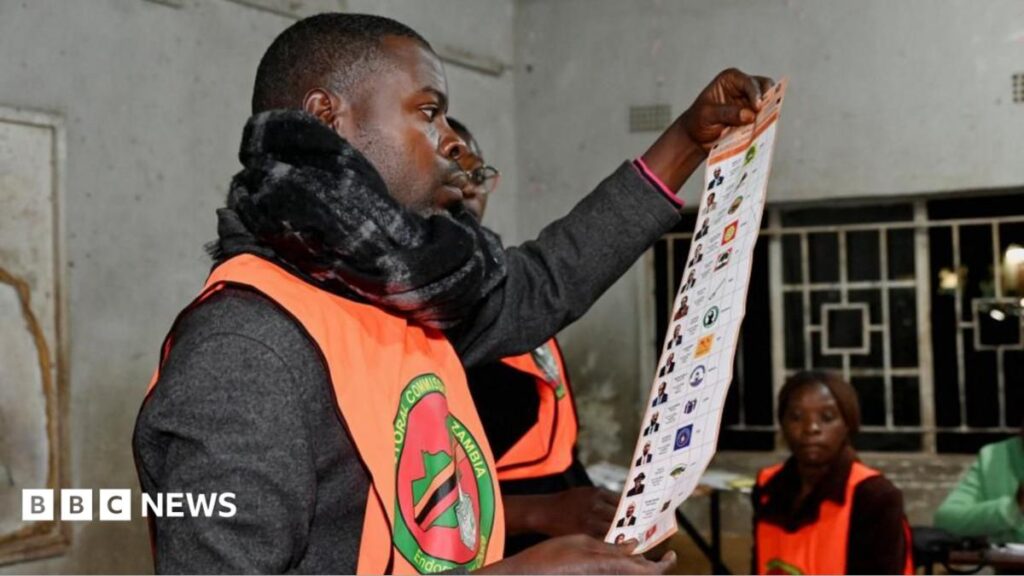
On the night of August 13, ECZ officials reported that armed groups stormed several counting centres in the Copperbelt and Lusaka provinces. According to the commission’s statement, the assailants threatened staff, forced them to flee, and stole a cache of marked ballot papers before the tally could be completed.
The commission said the theft of marked ballots “has compromised the integrity of the count” and announced an immediate suspension of the tallying process. Police have opened investigations, but sources close to the security forces say the perpetrators may be linked to local political militias seeking to disrupt the vote in swing districts.
Immediate fallout: legitimacy questions and opposition backlash
Opposition leaders have seized on the incident to call for a full recount and an independent audit, arguing that the missing ballots could tilt the final result in Hichilema’s favour. In a televised interview, Margaret Mwanakatwe warned that “any manipulation now will be remembered as the day Zambia’s democracy was hijacked.”
The ECZ, meanwhile, has pledged to reconstruct the missing data using electronic transmission logs and to hold a press conference within 48 hours. Critics, however, argue that the commission’s own admission of “theft” undermines public confidence and could fuel street protests, especially in urban centres where youth unemployment remains high.
Regional and diaspora implications: markets, migration and media narratives
Zambia is a key mining hub in Southern Africa, and political instability often translates into volatile copper prices on the Johannesburg Stock Exchange. Traders in Johannesburg noted a 1.8% dip in copper futures the morning after the counting was halted, reflecting investors’ fear of supply chain disruptions.
The Zambian diaspora in the United Kingdom and Canada, which numbers over 300,000, has been vocal on social media, demanding transparent elections and warning that prolonged uncertainty could spur a new wave of emigration. Remittance flows, which account for roughly 12% of Zambia’s GDP, could be affected if the political climate appears unsafe for families back home.
A pattern of electoral violence across Africa
The incident fits a broader trend of post‑election unrest in the continent. In Kenya’s 2022 race, rival camps clashed over ballot‑box handling, while Nigeria’s 2023 gubernatorial contests saw sporadic attacks on polling agents. Scholars at the University of Pretoria argue that “the weaponisation of election staff is becoming a low‑cost tactic for political actors seeking to delegitimize unfavorable outcomes.”
Zambia’s experience also echoes the 2019 Mozambican local elections, where the theft of marked papers prompted a national recount and delayed the release of results for weeks. In each case, the erosion of trust in electoral bodies has spurred calls for stronger regional oversight mechanisms, such as the SADC Electoral Observation Mission, which is currently reviewing its mandate.
What’s next: legal battles, international mediation and a possible rerun
Legal experts anticipate that opposition parties will file injunctions at the High Court of Zambia, demanding that the ECZ either restart the count with fresh paper ballots or adopt a hybrid electronic system that can be audited in real time. The court’s decision could set a precedent for how African nations handle compromised ballot material.
International actors, including the AU and the European Union, have offered to mediate a transparent resolution. A joint statement from the AU Commission on August 14 urged “all parties to respect the rule of law and to avoid any actions that could further inflame tensions.” If the ECZ cannot guarantee a credible tally within the constitutional 14‑day window, the constitution allows for a rerun in affected constituencies, a scenario that could extend the electoral calendar into late September.
Quick Answers
Why was the presidential vote counting halted in Zambia?
Counting stopped after armed attackers stole marked ballot papers and threatened polling staff, compromising the integrity of the tally.
What could the ballot theft mean for the election result?
Missing ballots may affect the final count, prompting opposition parties to demand a recount or a fresh vote in the affected areas.
How might this incident affect Zambia’s economy?
Political uncertainty can depress copper prices and reduce diaspora remittances, both of which are vital to Zambia’s GDP.
Source: www.bbc.co.uk




💬 Comments 0