Zelensky backs Trump’s “energy ceasefire” proposal as Russia still hits power plants, April 2026 impact on Ukraine and Africa
Background: the war’s energy battlefield
Since February 2022, Russia has repeatedly targeted Ukraine’s electricity infrastructure, plunging cities into blackouts and forcing the country to rely on costly imports and emergency generators. The strategy, described by Kyiv as a “weaponisation of energy,” has strained Ukraine’s budget and hampered industrial output, while also driving up global energy prices.
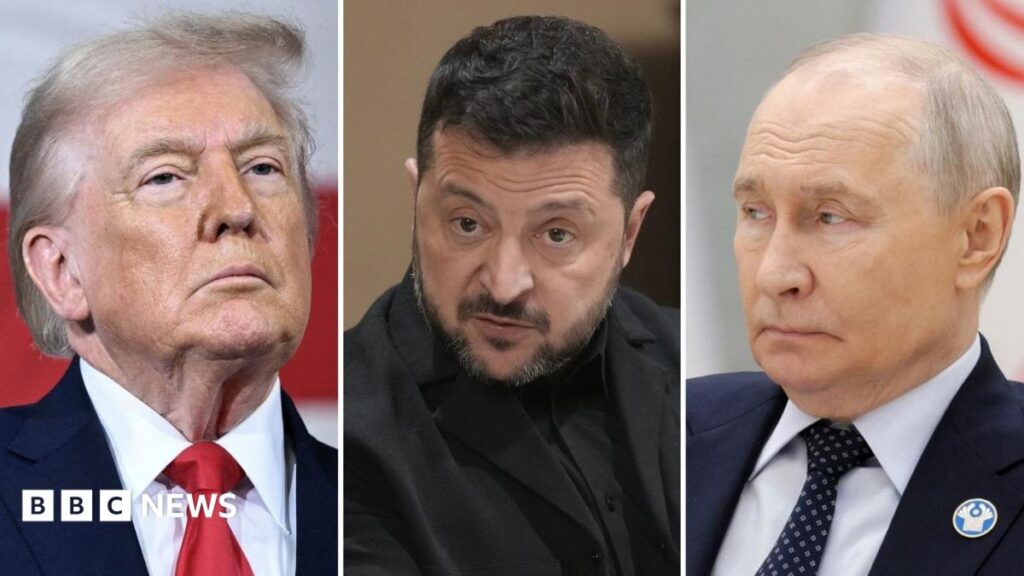
In early April 2026, former U.S. President Donald Trump announced a unilateral "energy ceasefire" that would halt attacks on power facilities if Moscow agreed to do the same. The proposal, made during a televised interview, was framed as a humanitarian gesture but quickly attracted skepticism because it was not coordinated with Kyiv or NATO allies.
Zelensky’s response and the surprise factor
Ukrainian President Volodymyr Zelensky expressed surprise at Trump’s announcement, noting that the idea of a cease‑fire on energy sites had not been discussed in recent diplomatic channels. Nevertheless, he said he would support any truce that Moscow honoured, provided it was part of a broader, verifiable agreement that also addressed the continued shelling of civilian infrastructure.
Zelensky added that, despite the proposed pause, Russian forces were still striking power plants across the east and south of Ukraine, a claim corroborated by satellite imagery released by the Kyiv Independent. He warned that a partial cease‑fire could be exploited by Russian troops to regroup and reinforce positions, a concern echoed by several NATO defense analysts.
Why the proposal matters for Ukraine’s energy security
If honoured, an energy cease‑fire could give Kyiv a breathing space to repair damaged substations, restore supply to critical hospitals, and reduce the need for diesel generators that cost up to five times more than pre‑war electricity rates. The savings would free up budgetary resources that could be redirected to the front lines or to humanitarian aid for displaced persons.
However, the lack of a binding verification mechanism makes the proposal risky. Past cease‑fires in the conflict, such as the grain corridor agreements brokered by the UN, have required third‑party monitoring to prevent violations. Without similar oversight, the cease‑fire could become a political talking point rather than a functional pause in hostilities.
Broader pattern: politicising humanitarian pauses
Trump’s energy cease‑fire is the latest in a series of politically driven humanitarian pauses that have emerged as the war drags on. Earlier this year, the United States and the European Union negotiated a limited “humanitarian corridor” for medical supplies, but critics argued that the move served domestic political narratives more than the needs on the ground.
The current episode highlights how external actors can leverage cease‑fire proposals to signal goodwill ahead of elections—in this case, Trump’s 2028 campaign. Analysts at the Carnegie Endowment note that such gestures often aim to reshape public perception of a candidate’s foreign‑policy credentials, while the actual impact on the conflict remains marginal unless they are embedded in a multilateral framework.
Implications for Africa: energy prices, food security and the diaspora
The war in Ukraine has already reverberated across Africa, where many countries depend on Russian wheat and Ukrainian corn to feed growing populations. A reduction in attacks on Ukrainian power plants could stabilise electricity generation, allowing the country to increase grain processing capacity and resume larger export volumes. That would help ease the tight grain market that has driven food inflation in Kenya, Nigeria and the Sahel region.
On the energy front, any de‑escalation that lowers global oil and gas prices would be welcomed by African economies still recovering from the 2023‑2024 price spikes. Lower fuel costs could translate into cheaper electricity for households in South Africa’s load‑shedding crisis or for off‑grid solar projects in East Africa, where financing often hinges on global commodity trends.
For the Ukrainian diaspora in Africa—particularly in South Africa, Egypt and Ghana—the cease‑fire could mean safer conditions for families still linked to relatives in conflict zones. Remittances, which account for roughly 5% of Ukraine’s foreign‑exchange earnings, might see a modest boost if the humanitarian narrative encourages more diaspora engagement.
What’s next: diplomatic pathways and African stakes
The immediate next step will be a diplomatic test: whether Moscow will officially acknowledge the cease‑fire and halt strikes on power facilities. Western officials have hinted that any such move would need to be tied to progress on a broader peace roadmap, including the release of prisoners and the restoration of Ukrainian sovereignty over occupied territories.
African leaders, particularly those in the African Union’s Peace and Security Council, are likely to watch the outcome closely. If the cease‑fire yields measurable reductions in energy‑related casualties, it could become a template for future negotiations on other critical infrastructure, such as water treatment plants and grain silos. Conversely, a failure could reinforce calls for a more coordinated, continent‑wide approach to conflict‑related commodity shocks.
Quick Answers
What is Donald Trump's "energy ceasefire" proposal?
It is a unilateral offer to pause attacks on Ukrainian power plants if Russia agrees to stop targeting them, announced by Trump in April 2026.
How could the ceasefire affect African food prices?
A pause in attacks could help Ukraine restore grain exports, easing global wheat shortages that have driven up food prices in many African countries.
Will the ceasefire automatically stop Russian strikes?
No, experts say a verification mechanism is needed; without it, Russia could continue attacks despite the proposal.
Source: www.bbc.co.uk




💬 Comments 0