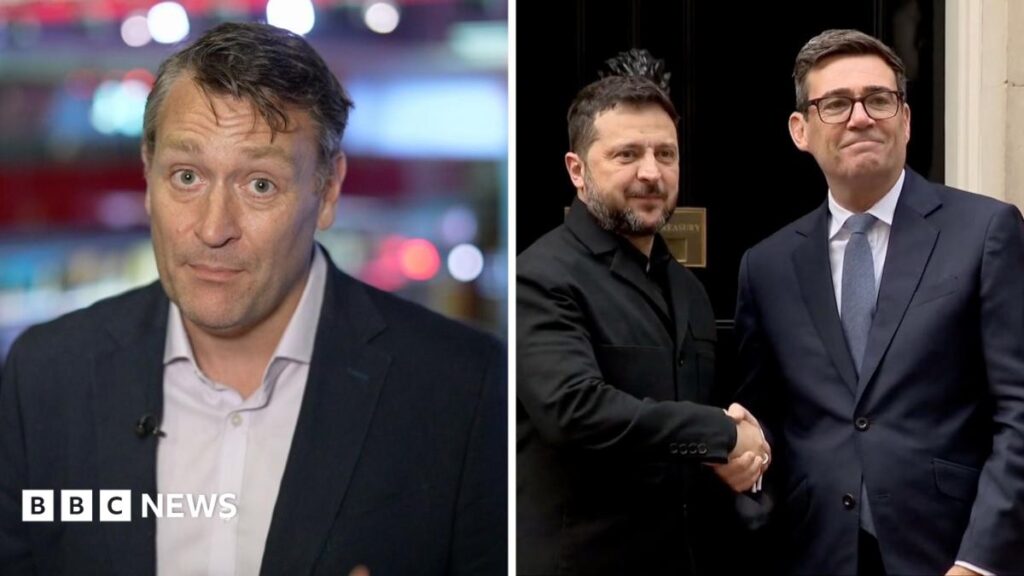
Zelensky meets UK Mayor Andy Burnham at Downing Street 2026: Ukraine aid, European unity and Africa’s grain security
Background: a five‑year war and a surprise London visit
Five years after Russia launched its full‑scale invasion, Ukrainian President Volodymyr Zelensky continues a relentless diplomatic tour of Europe. The latest stop, a meeting at Downing Street with Labour mayor of Manchester Andy Burnham, is unusual because Burnham is not a national minister but a prominent local leader who has built a reputation for progressive urban policy and a vocal stance against Russian aggression.
The visit comes as the United Kingdom’s foreign policy toward Kyiv is being reshaped by the post‑Brexit government, which is keen to demonstrate that support for Ukraine is not limited to Westminster. Burnham’s role as a mayor gives him a platform to mobilise city‑level aid, from humanitarian shipments to hosting Ukrainian refugees, and his presence at Downing Street signals a broader, more decentralized coalition forming around Kyiv.
What was on the agenda: aid, sanctions and post‑war reconstruction
According to a joint press release, Zelensky thanked Burnham for Manchester’s ongoing assistance, which includes a £5 million fund for medical supplies and a pledge to host a technology hub for Ukrainian start‑ups. The two leaders also discussed the latest package of EU military aid, confirming that the United Kingdom will contribute an additional £200 million in defensive equipment over the next 12 months.
Sanctions were another focal point. Burnham urged the UK to tighten measures on Russian oil exports that pass through European refineries, a move that could pressure Moscow’s war chest while protecting European energy security. Both men agreed that any new sanctions must be coordinated with African partners, many of whom rely on Russian grain and fertilizer imports.
Why it matters for Ukraine’s war effort and European cohesion
The meeting underscores a shift from a top‑down aid model to a more networked approach where city leaders, regional authorities and civil‑society groups play a direct role in delivering assistance. By involving Burnham, Zelensky is signalling that Ukraine’s survival depends on a wide‑ranging coalition that includes sub‑national actors capable of rapid response.
Politically, the gathering reinforces the United Kingdom’s commitment to NATO’s eastern flank at a time when Russia is testing the alliance’s resolve with new missile deployments in Kaliningrad. A fresh infusion of British defence equipment, combined with coordinated sanctions, is intended to blunt Moscow’s capacity to sustain high‑intensity combat, while also sending a message that European unity remains intact despite internal political turbulence.
African implications: grain security, diplomatic leverage and diaspora activism
The war in Ukraine has upended global grain markets, and Africa is the continent most exposed to those shocks. According to the United Nations World Food Programme, the region’s wheat imports fell by 30 % in 2024, fuelling price spikes that pushed millions into food insecurity. In the meeting, Burnham highlighted the need for a “grain corridor” that would allow Ukrainian grain to flow through the Black Sea and into African ports, bypassing Russian‑controlled routes.
Zelensky’s appeal to the UK for logistical support could translate into faster loading of grain ships at Liverpool and Manchester’s port facilities, which are already handling increased volumes of humanitarian cargo. Moreover, the discussion opened the door for African nations to join a new sanctions framework that targets Russian fertilizer exports—a sector that directly affects African agriculture. If African governments align with Western sanctions, they could gain diplomatic leverage, securing greater investment in renewable energy and climate‑resilient farming from the EU and the UK.
The Ukrainian diaspora in the United Kingdom, many of whom are of African‑Caribbean descent, also played a role in shaping the agenda. Community groups have organised fundraising drives that have already delivered over £2 million in medical kits to Kyiv. Their activism was cited by Burnham as a model for how diaspora networks can bridge continents, a point Zelensky emphasised when he thanked the diaspora for “keeping the spirit of Ukraine alive across the globe.”
Reactions and what comes next: a roadmap for deeper cooperation
British media praised the meeting as a “symbolic victory” for the Labour movement, while critics warned that focusing on city‑level diplomacy could dilute national strategy. In Kyiv, officials described the talks as “a concrete step toward a post‑war reconstruction plan that will involve not just governments but also cities, universities and private innovators.”
The next phase, according to sources within the UK Foreign Office, will involve a series of follow‑up meetings between Manchester’s trade delegation and Ukrainian officials to finalise the logistics of grain shipments and technology exchanges. A joint task force is expected to be announced by the end of 2026, aiming to coordinate humanitarian aid, defence procurement and the eventual rebuilding of Ukraine’s energy grid with British expertise.
Quick Answers
What new aid did the UK promise Ukraine during Zelensky's meeting with Andy Burnham?
The UK pledged an extra £200 million in defensive equipment and confirmed a £5 million Manchester‑fund for medical supplies and a tech hub for Ukrainian start‑ups.
How could the Zelensky‑Burnham meeting affect African grain imports?
By supporting a grain corridor through UK ports, the meeting could speed up the shipment of Ukrainian wheat to Africa, helping to offset the supply shortfall caused by the war.
Why is a city leader like Andy Burnham involved in high‑level Ukraine diplomacy?
Burnham represents a growing trend of sub‑national actors delivering rapid humanitarian and logistical support, signalling that Ukraine’s survival depends on a broad coalition beyond national governments.
Source: www.bbc.co.uk




💬 Comments 0