Zvi Sukkot sledgehammer attack on Palestinian memorial sparks outrage in Israel and abroad, 2026
Background: Far‑right surge and contested memory sites
In the last decade Israel’s political landscape has seen a steady influx of hard‑line nationalist parties that champion a "Jewish‑only" narrative of the land. The Religious Zionist Party, which Zvi Sukkot represents, has leveraged settlement expansion and opposition to any recognition of Palestinian historical claims to grow its parliamentary clout.
Memorials to the 1948 Nakba – the displacement of roughly 750,000 Palestinians – are especially sensitive. The site in question, located near the West Bank town of Qabatiya, was erected by a coalition of Palestinian NGOs and European donors in 2019 to mark the 78th anniversary of the exodus. While Israel’s Supreme Court has not formally ruled on its legality, the monument has become a flashpoint for activists on both sides.
The incident: Sukkot’s sledgehammer stunt
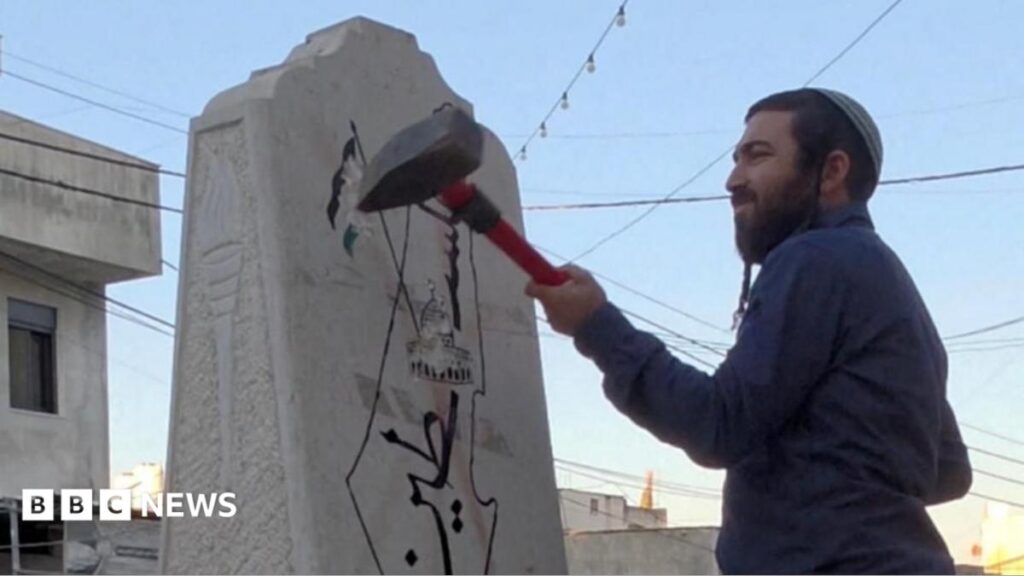
On 24 August 2026, Zvi Sukkot entered the fenced area surrounding the memorial armed with a sledgehammer, striking the stone plaque that bore the names of families expelled in 1948. Video footage captured by a local journalist shows the lawmaker shouting slogans before the first blow, and the act lasted roughly two minutes before security forces intervened.
Prime Minister Benjamin Netanyahu condemned the vandalism in a televised statement, calling it "an unacceptable breach of democratic norms." Opposition leaders, human‑rights groups, and the United Nations Office for the Coordination of Humanitarian Affairs all issued statements denouncing the attack as a deliberate provocation.
Why it matters: From rule of law to peace prospects
When an elected official takes the law into his own hands, it signals a weakening of institutional checks that normally curb extremist behavior. Legal scholars argue that Sukkot’s act could embolden other lawmakers to bypass due process, eroding public confidence in the Knesset’s ability to police its own members.
Internationally, the incident arrives at a delicate moment: the United States and the European Union are pushing for renewed talks on a two‑state solution. Vandalism of Palestinian heritage sites fuels Palestinian grievances, potentially hardening negotiating positions and giving hard‑liners on both sides a rallying point.
African and diaspora angles: A silent ripple
African countries maintain a mixed diplomatic record with Israel. Nations such as Kenya and Ethiopia have deepening security ties, while South Africa’s ruling African National Congress continues to champion Palestinian rights at the UN. Sukkot’s attack has prompted statements from the South African Ministry of International Relations, calling the act "a stark reminder of the systemic marginalisation of Palestinian narratives."
The African diaspora in Israel, estimated at 30,000 people, includes Ethiopian Jews and migrants from East Africa. Community leaders say the incident heightens fear that Israel’s far‑right rhetoric could spill over into broader xenophobic sentiment, threatening the safety of non‑Jewish minorities. Ethiopian activist groups have already organized a solidarity march in Tel Aviv, linking the Palestinian memorial to their own history of displacement.
A broader pattern of cultural erasure
Sukkot’s vandalism is not isolated. In 2024, another right‑wing MK was photographed removing graffiti that commemorated the 1976 Soweto uprising from a Jerusalem wall, claiming it was "political propaganda." Earlier this year, settlement authorities demolished an archaeological site that Palestinian scholars said contained artifacts from the Ottoman period. These episodes illustrate a systematic effort to rewrite the historical landscape in favour of a singular narrative.
Human‑rights NGOs, including B’Tselem and Amnesty International, argue that such acts amount to cultural genocide, a term used in the UN Convention on the Prevention and Punishment of the Crime of Genocide. While the legal threshold for genocide is high, the cumulative effect of erasing memory sites weakens prospects for coexistence.
What’s next: Legal, political and diplomatic fallout
The Knesset’s Ethics Committee has opened a preliminary investigation into whether Sukkot violated the parliamentary code of conduct. Legal analysts note that, under Israeli law, a lawmaker can be barred from office for “acts that bring the legislature into disrepute,” though prosecutions are rare.
On the diplomatic front, the United Nations Human Rights Council is expected to raise the incident in its upcoming special session on occupied territories. African Union representatives have signaled they will include the issue in the agenda for the 2027 summit, pressing member states to demand accountability from Israel.
For Palestinians, the incident reinforces the need to protect cultural heritage through international mechanisms, such as UNESCO’s World Heritage List. Meanwhile, Israeli civil‑society groups are mobilising legal aid funds to pursue civil damages on behalf of the memorial’s founders, hoping to set a precedent that deters future attacks.
Quick Answers
Who is Zvi Sukkot and why did he smash the Palestinian memorial?
Zvi Sukkot is a far‑right Israeli lawmaker from the Religious Zionist Party; he used a sledgehammer on a Nakba memorial as a political statement against Palestinian historical claims.
What legal consequences could Sukkot face for the vandalism?
He is under investigation by the Knesset Ethics Committee and could be barred from office or face criminal charges if prosecutors deem the act a breach of Israeli law.
How does the incident affect African countries and the diaspora in Israel?
South Africa condemned the act, and Ethiopian and other African diaspora groups in Israel fear it signals rising xenophobia that could threaten minority safety.
Source: www.bbc.co.uk



💬 Comments 0