Drone strike on Abyei market kills 150, deepening Sudan‑South Sudan tensions in 2026
A contested border town on the brink
Abyei, a small oil‑rich enclave straddling the Sudan‑South Sudan frontier, has been a flashpoint since the 2005 Comprehensive Peace Agreement. Both Khartoum and Juba claim the area, and the United Nations Interim Security Force for Abyei (UNISFA) has been the only buffer since 2011. In recent months, armed groups on both sides have intensified raids, while the Sudanese army has increasingly relied on unmanned aerial vehicles to project power across the porous border.
The market in Abyei, which sits on the main trade route linking the two capitals, is more than a commercial hub; it is a lifeline for thousands of internally displaced persons (IDPs) who fled earlier clashes. Seasonal traders from the Nuba Mountains, the Dinka heartland, and even Kenyan and Ethiopian merchants converge there each week, making any disruption reverberate across the region’s informal economy.
International observers have warned that the growing use of drones signals a shift in how the Sudanese military conducts cross‑border operations. Unlike artillery shells, drones can strike with precision—or with a false sense of precision—while providing plausible deniability. This new technology has already been documented in the Darfur campaign, and the Abyei strike marks its deadliest application to date.
The strike and its immediate fallout
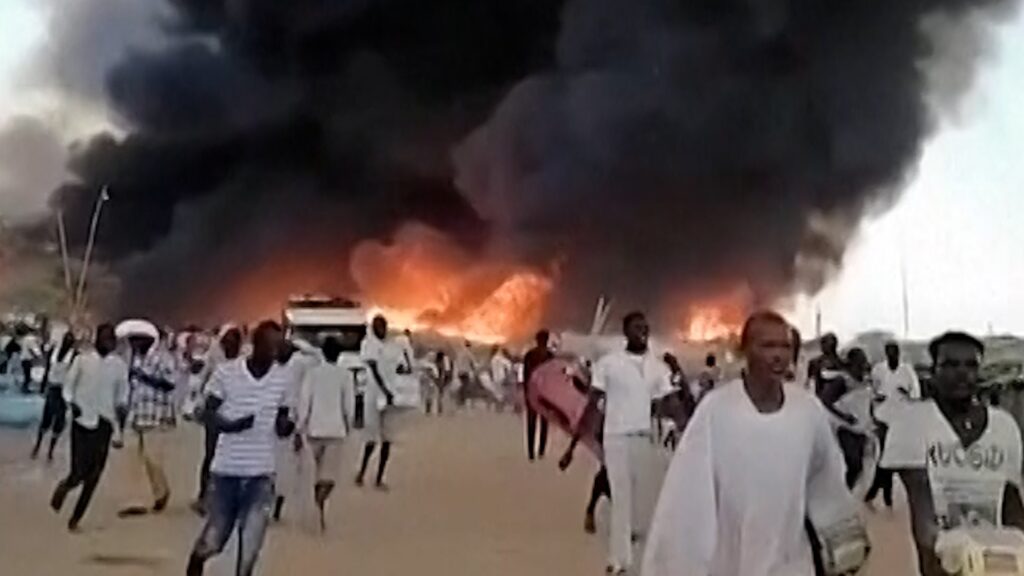
On the morning of 19 October 2026, a low‑flying unmanned aircraft hovered over Abyei’s central market and released a payload that ignited a series of explosions. Local eyewitnesses reported a deafening roar followed by a column of smoke that rose above the stalls. Preliminary tallies put the death toll at 150, with another 300 injured, according to the Abyei Health Committee, making it the deadliest single incident in the border’s recent history.
Sudan’s Ministry of Defense has not claimed responsibility, but satellite imagery released by the African Center for Strategic Studies shows a Sudan‑made Shahed‑131 drone taking off from a base near El Obeid shortly before the attack. Rebel groups, including the Sudan People’s Liberation Movement‑North (SPLM‑N), have condemned the strike as a war crime, while the Sudanese government officially blamed “terrorist elements” operating in the area.
Within hours, UNISFA troops erected a temporary cordon around the market, and the United Nations Office for the Coordination of Humanitarian Affairs (OCHA) dispatched a rapid‑response team. The market’s destruction crippled food supplies for nearby IDP camps, prompting an emergency appeal for $12 million from donors across Africa and Europe.
Why the strike matters for regional stability
The Abyei attack threatens to derail the fragile peace process that began in early 2025, when Sudan and South Sudan agreed to a joint oil‑revenue sharing framework. Abyei’s oil fields account for roughly 15 % of South Sudan’s export earnings; any disruption could reduce Juba’s fiscal capacity by an estimated $400 million a year, according to a World Bank briefing. This loss would tighten already strained budgets for health, education, and security in the young nation.
Beyond economics, the strike fuels a dangerous narrative that the Sudanese military is willing to use lethal force against civilian populations to assert territorial claims. Neighboring states such as Ethiopia and Uganda have warned that a spill‑over of refugees could overwhelm their own humanitarian systems, especially as the Horn of Africa already grapples with climate‑driven displacement.
The African Union’s Peace and Security Council, which has been mediating the border dispute since 2023, called the incident a “gross violation of international humanitarian law.” If the UN’s planned fact‑finding mission, slated for November, encounters obstruction, the council may consider imposing targeted sanctions on Sudanese military officials—a step that could further isolate Khartoum in the continental diplomatic arena.
Diaspora response and humanitarian mobilisation
African diaspora organisations in the United Kingdom, Canada, and the United States quickly mobilised social‑media campaigns under the hashtag #AbyeiLivesMatter. Within 48 hours, crowdfunding platforms reported over $2 million raised for emergency medical kits and temporary shelters for survivors. The Nigerian diaspora, which maintains strong trade links with Abyei’s market, pledged to send food parcels through the Nigerian Red Cross, highlighting the cross‑national solidarity that often goes unnoticed in Western reporting.
Human rights NGOs, including Amnesty International Africa, have urged the International Criminal Court to open a preliminary examination of possible war crimes. Their statements cite the strike’s indiscriminate nature and the high civilian death toll as evidence of a pattern of attacks that could qualify as crimes against humanity if linked to a broader policy of intimidation.
In Kampala, South Sudanese community leaders organized a candlelight vigil that drew more than 5 000 participants, many of whom are former refugees now settled in Uganda. The event underscored how the Abyei tragedy resonates beyond the immediate border, reminding the diaspora that peace in the region directly impacts their families’ safety and prospects for eventual repatriation.
What comes next: diplomatic and security pathways
The next few weeks will test whether diplomatic channels can contain the fallout. South Sudan’s President Salva Kiir has called for an emergency summit of the Intergovernmental Authority on Development (IGAD) to discuss a joint security patrol that would replace UNISFA’s limited mandate. If accepted, such a patrol could introduce a multinational oversight mechanism, though critics warn it may lack the rapid‑reaction capacity needed to counter drone incursions.
The United Nations is preparing to issue a resolution demanding a transparent investigation into the drone strike, with a deadline for Sudan to provide flight‑log data. Failure to comply could trigger Chapter VII sanctions, which would freeze Sudanese military assets abroad—a move that could pressure Khartoum to negotiate but also risk hardening its stance if perceived as external meddling.
For the longer term, analysts at the African Development Bank argue that the Abyei crisis underscores the need for a regional drone‑regulation framework. Such a treaty would require signatories to share flight‑path data and establish a verification body, potentially curbing the unchecked use of armed UAVs in intra‑African conflicts. Whether the current tragedy can catalyse that political will remains uncertain, but the cost of inaction is now starkly evident.
Quick Answers
Who is believed to be behind the Abyei market drone strike?
Satellite evidence points to a Sudan‑made Shahed‑131 drone, and Sudanese officials have been linked to the launch, though the government denies responsibility.
How will the strike affect South Sudan’s oil revenue?
Abyei’s oil fields generate about 15 % of South Sudan’s exports; disruption could cut the country’s annual oil income by roughly $400 million.
What humanitarian aid is being mobilised for the victims?
International donors have pledged $12 million, while diaspora groups have raised over $2 million for medical supplies and temporary shelters.
Source: www.aljazeera.com


💬 Comments 0