Ethiopia acquires Russian Su-30 fighter jets and S‑300 air‑defence in 2026 amid renewed Tigray fighting
Background: Ethiopia’s military buildup and the revived Tigray war
Since Prime Minister Abiy Ahmed took office in 2018, Ethiopia has pursued a rapid modernisation of its armed forces, buying equipment from the United States, China and France. The move was meant to cement the country’s role as a regional power and to replace ageing Soviet‑era hardware left over from the Derg era. However, the 2020‑2022 stalemate in the Tigray region, which saw a fragile cease‑fire crumble, forced Addis Ababa to reassess its air‑power capabilities, especially after the Tigray People’s Liberation Front (TPLF) demonstrated it could deploy drones and anti‑aircraft weapons against government positions.
The conflict reignited in September 2026 when Tigrayan forces launched a coordinated offensive along the Abergelle‑Mekelle corridor, prompting the federal army to call for “air superiority” to protect supply lines. International observers noted a surge in civilian casualties from aerial strikes, raising concerns that Ethiopia’s existing fleet of aging Mi‑35s and Chinese J‑10s would be insufficient for a high‑intensity campaign.
The deal: What Ethiopia bought from Russia and why
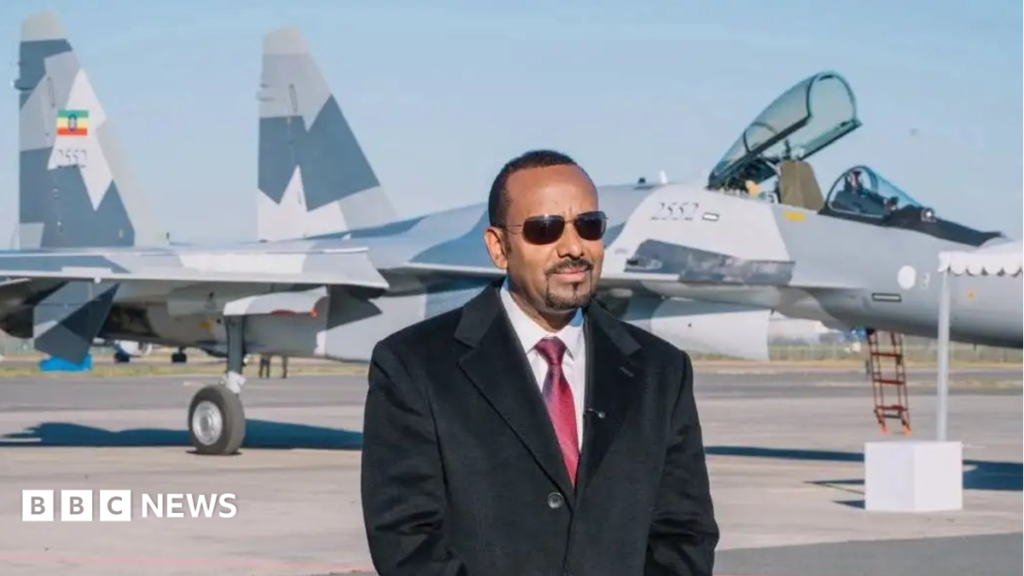
In late October 2026, Ethiopian officials announced the purchase of four Russian‑made Su‑30SM multi‑role fighter jets, two upgraded Mi‑35 attack helicopters and a batch of S‑300PMU‑2 surface‑to‑air missile batteries. The Su‑30s, capable of carrying both air‑to‑air and air‑to‑ground ordnance, represent a leap in range and payload compared with Ethiopia’s older fleet. The S‑300 system, meanwhile, can engage targets up to 150 kilometres away, giving Addis Ababa a credible deterrent against any hostile aircraft that might enter its airspace.
Sources close to the Ministry of Defense said the agreement, valued at roughly $1.2 billion, was signed through a Russian state‑owned intermediary to bypass Western export‑control restrictions. Payment is reportedly being made in a combination of hard currency and oil‑linked credits, a structure similar to other Russian arms deals with African states such as the Central African Republic and Sudan. The timing – just weeks after the latest flare‑up in Tigray – suggests the government wanted to secure the hardware before the United Nations could intervene with additional sanctions.
Regional and African implications: security, economics and the diaspora
The acquisition reshapes the Horn of Africa’s security calculus. Eritrea, a long‑time ally of the Tigrayan rebels, has already warned that a more capable Ethiopian air force could tilt the balance in favour of Addis Ababa, potentially prompting it to seek its own upgrades from China or even a covert partnership with Iran. Sudan, still reeling from its own internal conflict, is watching closely, fearing that an empowered Ethiopia could intervene in border disputes over the al‑Fashaga fertile strip, a flashpoint that has sparked skirmishes in the past.
Economically, the deal opens a new market channel for Russian defence exports in Africa, reinforcing Moscow’s strategy of deepening ties with the continent after the loss of many European customers due to sanctions. For African investors, the purchase signals that regional governments are willing to spend heavily on high‑tech weaponry, which could spur local maintenance and training industries if Ethiopia decides to develop an indigenous support ecosystem. Kenyan and Ethiopian tech firms have already expressed interest in providing logistics software for the S‑300’s command‑and‑control network.
The Ethiopian diaspora in the United States, Canada and Europe has reacted with alarm. Human‑rights organisations based in Washington have warned that the new jets could increase the likelihood of civilian casualties, echoing past incidents where air strikes in Tigray caused displacement of hundreds of thousands. Diaspora community leaders have called for renewed diplomatic pressure on Addis Ababa, arguing that any escalation will deepen the humanitarian crisis that already strains UN‑aid operations across the Horn.
Outlook: peace talks, sanctions and the future of arms deals in Africa
The United Nations has scheduled a new round of peace negotiations in Addis Ababa for early 2027, but the presence of Su‑30s on the runway may alter bargaining power. Analysts from the International Crisis Group argue that the Ethiopian government now holds a “stronger negotiating chip” because it can threaten air strikes that would be costly for the TPLF to counter. Conversely, the Tigrayan leadership is likely to appeal to regional bodies such as the African Union for a cease‑fire, hoping to paint the jet purchase as an act of aggression that violates African norms on non‑proliferation.
Western capitals have already hinted at a fresh wave of sanctions targeting the procurement network that enabled the deal, including potential restrictions on Russian financing and secondary sanctions on companies that provide spare parts. If such measures take effect, Ethiopia could face difficulties in maintaining the aircraft, forcing it to turn to Russian technicians or to develop a domestic maintenance capability—both costly endeavours that could divert resources from reconstruction and health spending.
Looking ahead, the deal may set a precedent for other African states seeking to bypass Western embargoes. Nations such as the Democratic Republic of Congo and Mozambique, both embroiled in internal conflicts, are reportedly in talks with Moscow for similar air‑defence packages. The broader trend suggests a growing bifurcation in the continent’s defence procurement landscape, where a subset of governments align with Russian or Chinese suppliers while others remain tied to Western arms markets. How this split evolves will shape not only regional security but also Africa’s diplomatic leverage in global geopolitics.
Quick Answers
What Russian aircraft did Ethiopia buy in 2026?
Ethiopia purchased four Su‑30SM multi‑role fighter jets, two upgraded Mi‑35 attack helicopters and S‑300PMU‑2 surface‑to‑air missile batteries.
How might the new jets affect the Tigray conflict?
The Su‑30s give the federal army air‑superiority, potentially intensifying aerial strikes and shifting the balance against Tigrayan forces, which could complicate peace talks.
Why is the deal significant for Africa?
It highlights Russia’s expanding arms market in Africa, may spark an arms race in the Horn of Africa, and influences diaspora and humanitarian concerns across the continent.
Source: www.bbc.co.uk




💬 Comments 0