Ethiopia Tigray Conflict Escalates: 52 Civilians Killed, Tourists Stranded in Lalibela 2026
Background to the Tigray Conflict
The war in Ethiopia’s northern Tigray region began in November 2020 when federal forces launched an offensive against the Tigray People’s Liberation Front (TPLF). What started as a political power struggle quickly spiraled into a humanitarian crisis, with accusations of war crimes, famine, and displacement on both sides. Over the past six years, periodic ceasefires have been announced, only to collapse under mistrust and competing territorial claims.
In early 2024, a fragile peace deal brokered by the African Union allowed limited humanitarian corridors, but the arrangement never fully addressed underlying grievances. The federal government’s push to integrate Tigray’s regional forces into the national army met resistance, while the TPLF insisted on autonomy and recognition of wartime atrocities. This stalemate set the stage for the latest flare‑up, which has now spilled beyond Tigray’s borders.
The latest escalation and civilian toll
According to a medic who spoke to the BBC on the ground, fighting intensified on September 28, 2026, in the eastern districts of Tigray, resulting in the death of 52 civilians in a single day. The casualties were largely women and children caught in cross‑fire after an artillery barrage hit a market square. The medic, who asked to remain anonymous for safety, said that medical supplies were already scarce, forcing volunteers to improvise with makeshift stretchers and local herbal remedies.
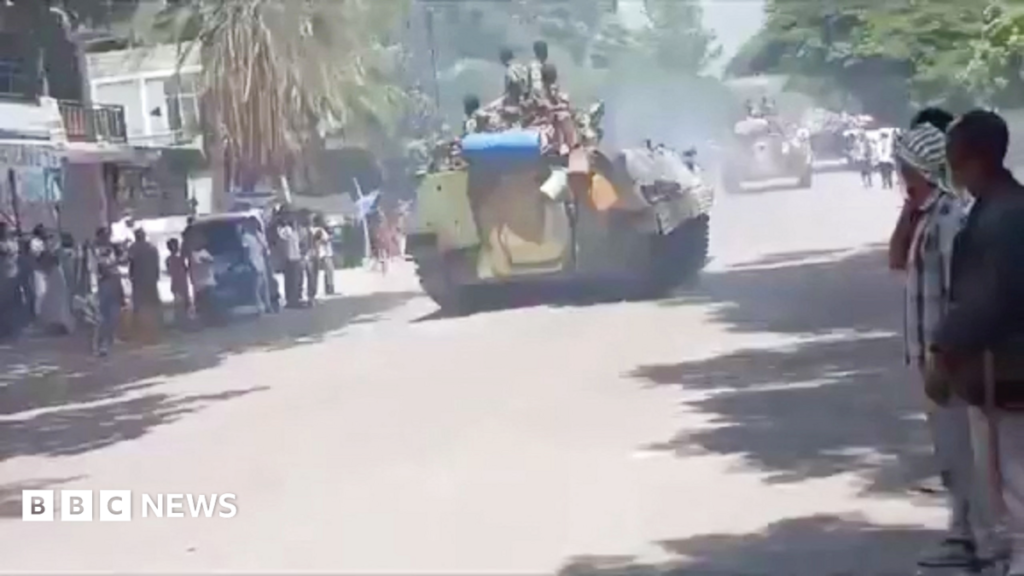
The surge in hostilities coincided with a reported advance by federal troops into the neighboring Amhara region, specifically the Wag Hemra zone. Satellite imagery released by an independent monitoring group showed smoke plumes and movement of armored vehicles along the highway that links Mekelle to the historic town of Lalibela. The expansion of the battlefield has raised fears of a broader regional conflagration that could engulf key agricultural zones and displace hundreds of thousands more people.
Ripple effects on tourism and regional stability
Lalibela, a UNESCO World Heritage site famed for its rock‑hewn churches, has seen its tourism sector grind to a halt as travel agencies warn visitors that roads are blocked and security checkpoints are unpredictable. Over 200 foreign tourists were stranded in the town last week, relying on local hotels and NGOs for food and shelter. The Ethiopian Ministry of Culture and Tourism confirmed that flight cancellations to the nearby airport have reduced tourist arrivals by 78% compared with the same period in 2025.
The tourism downturn is more than a temporary inconvenience; it threatens the livelihoods of thousands of Ethiopians who depend on guide services, souvenir vendors, and hospitality staff. A recent study by the Addis Ababa-based Institute for Development Policy (IDP) estimated that the conflict‑related loss could cost the regional economy roughly $120 million in 2026, a figure that dwarfs the annual revenue generated by the sector before the war.
Implications for the Ethiopian diaspora and African investors
The diaspora community in North America, Europe, and the Middle East has been closely monitoring the situation, fearing that renewed violence could jeopardise remittance flows that account for about 30% of Ethiopia’s foreign exchange earnings. According to data from the World Bank, remittances fell by 12% in the first half of 2026 after the fighting spread to Amhara, prompting diaspora groups to launch emergency fundraising campaigns for displaced families.
African investors, especially those from Kenya, South Africa, and Nigeria, have begun to reassess projects in Ethiopia’s manufacturing corridors. The East Africa Trade and Investment Forum (EATIF) noted that several textile and agro‑processing plants slated to open in the Oromia and Amhara regions are now facing delayed permits and heightened security costs. If the conflict persists, Ethiopia could lose its competitive edge as a gateway to the Horn of Africa, a concern echoed by the African Development Bank’s regional director.
International response and what could happen next
The United Nations has called for an immediate ceasefire and the unhindered delivery of humanitarian aid, while the United States and European Union have warned of renewed sanctions should civilian casualties rise further. However, analysts at the International Crisis Group argue that external pressure alone is insufficient without a credible African mediation framework that addresses both political autonomy and security integration.
Looking ahead, the most plausible scenarios range from a negotiated pause—potentially mediated by the African Union’s new peace‑building task force—to a protracted stalemate that drags the conflict into 2027. In either case, the humanitarian toll will likely grow, and the economic fallout could ripple across the Horn of Africa, affecting trade routes that link the Red Sea to the Indian Ocean. For Ethiopians at home and abroad, the urgency now lies in pressing for a durable settlement that restores civilian safety and revives the country’s once‑vibrant tourism and investment climate.
Quick Answers
How many civilians were reported killed in the latest Tigray fighting?
A medic interviewed by the BBC said 52 civilians were killed during the September 28, 2026 escalation.
Which regions beyond Tigray have been affected by the recent clashes?
The fighting has spread into Ethiopia’s Amhara region, particularly the Wag Hemra zone, and disrupted travel to the historic town of Lalibela.
What impact has the conflict had on tourism in Lalibela?
Tourist arrivals have dropped by about 78% and over 200 visitors were stranded, causing a sharp loss of revenue for local businesses.
Source: www.bbc.co.uk




💬 Comments 0