Father of Omar al‑Naasan says ‘we expect our sons to be killed’ after West Bank teen shooting 2026
Background: Settler violence and a fragile peace
Since the Oslo Accords, the West Bank has seen a steady rise in clashes between Israeli settlers and Palestinian residents, with human‑rights groups documenting over 1,000 settler‑related attacks in the past five years. The expansion of settlements in Area C, which remains under full Israeli military control, has intensified competition over land, water and movement, creating a volatile environment where teenagers often become the first victims.
The Israeli Defence Forces (IDF) maintain that they operate to protect civilians from extremist settlers, yet numerous United Nations reports have highlighted a pattern of excessive force and a lack of accountability. In 2024, the UN Special Rapporteur on the occupied Palestinian territories warned that the growing impunity for settler violence threatens to erode any remaining trust in a two‑state solution.
Against this backdrop, Palestinian families have increasingly voiced a sense of resignation. The phrase “we expect our sons to be killed,” spoken by the grieving father of a recent victim, captures a painful reality that has been echoed in villages across the occupied territories for years.
The shooting and a father's heartbreaking testimony
On 2 September 2026, Israeli settlers accompanied by soldiers entered the village of Qabatiya in the northern West Bank. According to eyewitnesses reported by local media, the group opened fire on two teenagers, Omar al‑Naasan, 16, and Khalil Abu Alia, 15, who were walking home from school. Both boys were pronounced dead at the scene, and the incident quickly spread through social media, prompting outrage across the Palestinian territories.
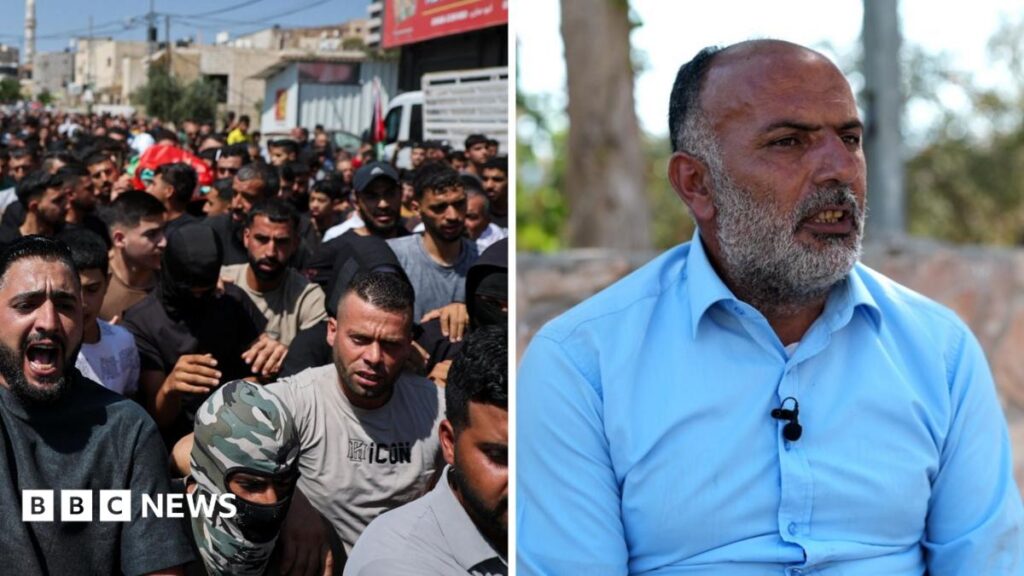
When BBC journalists arrived to interview the families, Omar’s father, Mahmoud al‑Naasan, broke down while describing the moment the bullets struck. He said, “We have lived under the threat for decades, but hearing that my son is gone makes it real. We expect our sons to be killed, and that is why we keep fighting for justice.” His words were later quoted by the BBC and echoed by regional outlets.
Israeli authorities announced an internal investigation, stating that the soldiers involved were acting under orders to protect civilians from “unprovoked aggression.” However, human‑rights organisations have repeatedly criticized such inquiries for their lack of independence and transparency, noting that no settler has ever been prosecuted for a similar killing.
Why it matters: Regional stability and the peace process
The killing of Omar and Khalil adds another flashpoint to an already fragile security situation. Each incident fuels retaliatory attacks, which in turn prompt stricter security measures from the IDF, creating a vicious cycle that undermines any diplomatic momentum. Analysts at the Carnegie Middle East Center argue that the cumulative effect of such killings makes a negotiated settlement increasingly unlikely before the next election cycle in Israel.
Beyond the immediate tragedy, the incident has implications for the broader Middle‑East diplomatic arena. The Arab League, which has been pushing for a renewed peace conference, cited the shooting as evidence that Israel’s settlement policy is “incompatible with a viable two‑state solution.” The United States, meanwhile, faces pressure from both its domestic pro‑Israel lobby and progressive lawmakers demanding an end to impunity for settler violence.
International law scholars point out that the pattern of settler attacks may qualify as war crimes under the Rome Statute, potentially opening the door for investigations by the International Criminal Court (ICC). The ICC’s Office of the Prosecutor opened a preliminary examination of the West Bank in 2021, and each new fatality adds weight to the argument that the situation meets the threshold for further action.
African and diaspora reactions: Solidarity, activism and policy stakes
Across Africa, the shooting resonated strongly with civil‑society groups that see parallels between settler colonialism in Palestine and historic land dispossession on the continent. In South Africa, the ANC’s International Relations Department released a statement condemning the killings and calling for “solidarity with the Palestinian people in their struggle for self‑determination.” The statement was echoed by the African Union’s Peace and Security Council, which urged the UN to deploy a monitoring mission in the West Bank.
The Palestinian diaspora in Europe and North America mobilised quickly, organising candle‑light vigils in cities such as London, Paris and New York. In Lagos, a coalition of student unions and human‑rights NGOs held a rally outside the Israeli embassy, demanding that the Nigerian government raise the issue at the next UN General Assembly. The rally was attended by over 2,000 participants, according to a report by the Premium Times.
These actions are not merely symbolic. African governments that maintain strong trade ties with Israel—such as Kenya, Ethiopia and Rwanda—are now facing domestic pressure to reassess those relationships. In Kenya, opposition lawmakers have filed a parliamentary motion to suspend arms sales to Israel until an independent investigation into settler killings is completed, a move that could reshape the East African security market.
What’s next: Investigations, legal avenues and the fight for accountability
The Israeli military’s promised investigation is expected to produce a report within 30 days, but past inquiries have rarely led to prosecutions. Human‑rights groups are calling for an independent international fact‑finding mission, arguing that only an external body can ensure impartiality. The United Nations Office for the Coordination of Humanitarian Affairs (OCHA) has already requested access to the site, a request that Israel has yet to confirm.
On the legal front, the families of Omar and Khalil have retained a team of international lawyers to pursue a case at the ICC, citing the “systematic nature” of settler attacks. While the ICC’s jurisdiction over the occupied territories remains contested by Israel, the filing could pressure the court to issue a formal ruling on whether the pattern of violence constitutes a crime against humanity.
For Palestinian communities, the tragedy reinforces a grim calculus: the loss of youth erodes social cohesion and economic prospects. NGOs operating in the West Bank are now intensifying mental‑health programmes for grieving families, while also documenting testimonies for future truth‑and‑reconciliation initiatives. The international community’s response in the coming weeks will determine whether these efforts translate into concrete policy changes or remain symbolic gestures.
Quick Answers
Who were the teenagers killed in the West Bank shooting?
The victims were 16‑year‑old Omar al‑Naasan and 15‑year‑old Khalil Abu Alia, both from the village of Qabatiya.
What has been the reaction of African countries to the shooting?
South Africa, the African Union and several African governments have condemned the killing, with some calling for an international investigation and others facing domestic pressure to review ties with Israel.
Could the incident be taken to the International Criminal Court?
The families have filed a request with the ICC, arguing that repeated settler killings may constitute war crimes or crimes against humanity under the Rome Statute.
Source: www.bbc.co.uk



💬 Comments 0