France imposes new curfew in Paris and Marseille after June 2026 riots, affecting African diaspora
Background: unrest in French cities and the lead‑up to curfews
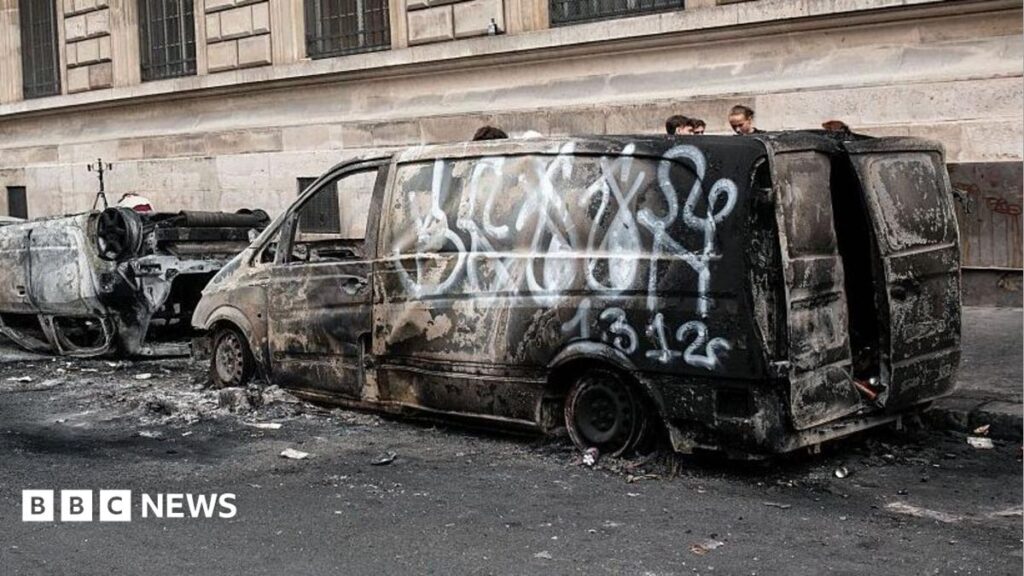
In early June 2026, a series of street clashes erupted across several French municipalities, sparked by a controversial police operation in the northern suburb of Saint‑Denis. The unrest quickly spread to Marseille’s historic Panier district and later to Lyon, prompting a wave of property damage, looting, and confrontations with law‑enforcement. While the immediate trigger was a localized incident, analysts point to deeper grievances – high youth unemployment, perceived discrimination, and a sense that the French Republic has failed to address the socioeconomic marginalisation of many immigrant‑origin communities.
The French interior ministry initially responded with a heavy police presence, deploying riot units and aerial drones. By the end of the first weekend, officials reported over 150 arrests and dozens of injuries. Yet the violence persisted into the night, prompting Prime Minister Gabriel Attal to consider more restrictive measures. The decision to impose curfews, a tool rarely used since the 2023 protests, signalled a shift toward a security‑first approach in a climate of growing public anxiety.
The curfew decision and its immediate impact
On Monday evening, Interior Minister Sébastien Lecornu announced that new curfews would be imposed for Tuesday night in the most affected cities. He said the curfews would be decided “where necessary,” leaving room for local authorities to tailor restrictions based on real‑time intelligence. In Paris, the curfew applies from 10 p.m. to 5 a.m. across the 18th, 19th and 20th arrondissements, while Marseille’s historic centre faces a similar restriction. The decree also empowers police to stop and search individuals found outside during the prohibited hours, a power that has drawn criticism from civil‑rights groups.
Within hours of the announcement, street activity in the targeted zones fell dramatically. Bars and night‑clubs closed early, public transport reduced service, and residents reported a noticeable quiet on the usually bustling boulevards. While the curfew helped to contain the immediate wave of vandalism, it also generated a new set of concerns, especially among small‑business owners who rely on evening trade to stay afloat.
Why it matters for France’s African diaspora and suburban communities
A significant proportion of the neighborhoods under curfew are home to large African‑origin populations. In Saint‑Denis, for example, over 40 % of residents trace their roots to West Africa, particularly Senegal, Mali and the Ivory Coast. The curfew therefore does not just limit the movement of potential rioters; it restricts the nightly routines of families, students and informal workers who often rely on late‑night shifts in hospitality, transport and street vending.
Local African community leaders have warned that the measure could deepen mistrust between the state and diaspora groups already feeling alienated. According to a statement from the Council of African Associations in France, “curfews that blanket entire districts punish everyone, not just the few who turn to violence, and risk reinforcing the narrative that African‑French neighborhoods are unsafe spaces.” The council is calling for targeted social programmes, job creation schemes, and dialogue platforms rather than blanket security orders.
Connecting the French response to broader European security trends
France is not alone in turning to curfews as a rapid‑response tool. Over the past year, Germany, the Netherlands and Belgium have each experimented with temporary night‑time bans after localized flare‑ups linked to extremist groups or gang activity. The pattern reflects a growing reliance on short‑term, high‑visibility measures to restore order while longer‑term structural reforms lag behind.
Critics argue that such tactics may provide only a temporary lull and can inadvertently fuel the very radicalisation they aim to curb. A recent report by the European Policy Centre noted that “repeated use of curfews without accompanying investment in education, housing and employment can entrench a security‑first narrative that marginalises minority communities.” France’s latest curfew thus sits at the intersection of immediate public‑order concerns and a wider debate about the sustainability of punitive versus preventive strategies across the EU.
What’s next: political fallout and the road to lasting solutions
Politically, the curfew has already become a flashpoint. Opposition parties, including the far‑right National Rally, have seized on the episode to argue that the government is either too weak or too heavy‑handed, depending on their ideological stance. Prime Minister Attal, however, maintains that the curfew is a “temporary, proportionate response” while a “comprehensive plan” to address youth disenfranchisement is being drafted. Sources close to the interior ministry say a task force will be convened within weeks, bringing together housing officials, labour ministries and representatives from diaspora organisations.
For African‑French communities, the coming weeks will be a test of whether the state’s response evolves beyond enforcement. If the promised task force delivers concrete investments – such as apprenticeships for young people in the banlieues, funding for community centres, and reforms to policing practices – the curfew could be remembered as a turning point that sparked meaningful change. If not, the episode may reinforce a cycle of mistrust, prompting further protests and, potentially, more restrictive security measures in the future.
Quick Answers
Which French cities were placed under curfew after the June 2026 riots?
Paris (18th, 19th and 20th arrondissements) and Marseille’s historic centre were ordered to observe a curfew from 10 p.m. to 5 a.m. on Tuesday night.
Who announced the new curfew and what authority does it give police?
Interior Minister Sébastien Lecornu announced the curfew, granting police the power to stop and search anyone found outside during the prohibited hours.
How might the curfew affect African diaspora communities in France?
The curfew restricts night‑time work and social activities in neighborhoods with large African‑origin populations, potentially harming small businesses and deepening mistrust toward authorities.
Source: www.bbc.co.uk




💬 Comments 0