India opposition mega rally seeks election chief resignation over 130 million voter cuts 2026
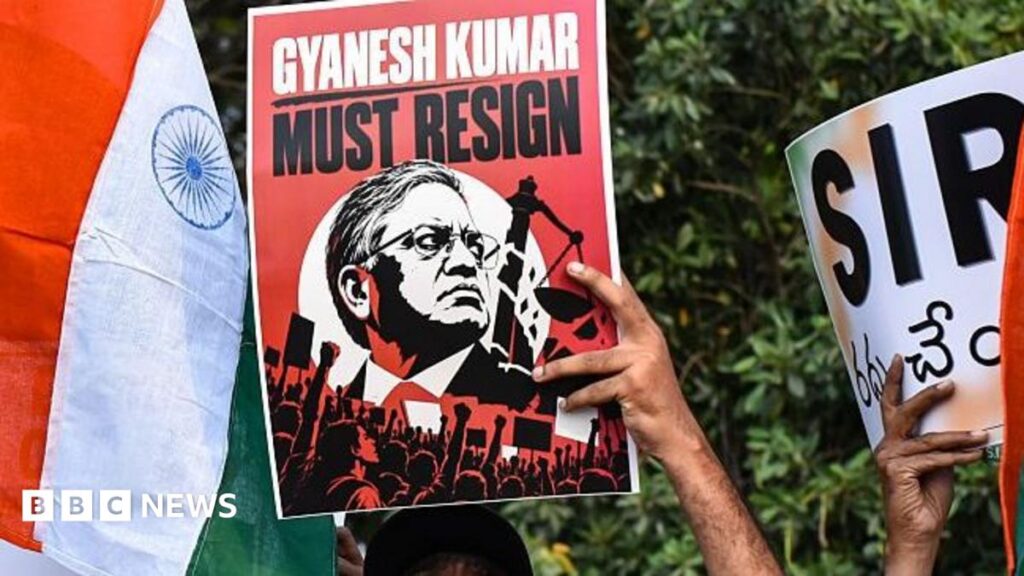
Background: The voter roll revision and its stakes
In early 2026 the Election Commission of India launched a massive clean‑up of the electoral rolls, aiming to delete duplicate entries, deceased voters and those who had moved abroad. Officials said the exercise would improve the credibility of the voting process, but the methodology sparked alarm among civil‑society groups who warned that up to 130 million eligible voters could be removed inadvertently.
The controversy stems from the use of a new biometric matching algorithm that, according to critics, flags many legitimate voters as duplicates because of common surnames and regional naming conventions. Several state election officers have already reported glitches, with some districts seeing a sudden drop of millions of names from their local lists.
Opposition parties, most notably the Indian National Congress and the Aam Aadmi Party, have framed the roll‑purge as a political weapon designed to suppress votes in regions where the ruling Bharatiya Janata Party (BJP) enjoys a thin margin. The claim is bolstered by past incidents where roll‑clean‑ups coincided with tight electoral contests.
The opposition’s rally: scale and demands
On 30 October 2026, a coalition of opposition leaders announced a nationwide mega rally in New Delhi, scheduled for 5 November. Organisers say the event will draw over a million participants, making it the largest political gathering in the capital since the 2014 anti‑corruption protests.
The rally’s headline demand is the resignation of the Chief Election Commissioner, Rajiv Kumar, whom opposition figures accuse of overseeing a biased roll‑revision that threatens the franchise of hundreds of millions. Speakers also plan to present a petition demanding an independent audit of the voter database and a temporary freeze on deletions until a transparent review is completed.
Logistical preparations have been massive: the opposition has booked multiple venues, arranged for public transport subsidies, and enlisted social‑media influencers to amplify the call. Security officials have warned of possible clashes, but the coalition insists the protest will remain peaceful, emphasizing its democratic purpose.
Why the rally matters for Indian democracy
India’s electoral system is the world’s largest, and any perceived tampering reverberates far beyond its borders. A roll‑purge that sidelines 130 million voters—roughly one‑tenth of the country’s electorate—could tilt the balance in tightly contested states such as Uttar Pradesh, West Bengal and Tamil Nadu, where opposition parties still hold significant sway.
Analysts argue that the episode is part of a broader trend of democratic backsliding in several large democracies, where institutions are increasingly weaponised for partisan advantage. According to a report by the International Institute for Democracy and Electoral Assistance, India’s ranking on the global democracy index slipped for the second consecutive year, largely because of concerns over electoral fairness.
If the chief election commissioner steps down under pressure, it could set a precedent for greater accountability of India’s constitutional bodies. Conversely, a hard‑line response from the government—such as deploying police to block the rally—might deepen public distrust and fuel further mobilisation, potentially destabilising the upcoming general election scheduled for early 2027.
Ripple effects on Africa and the Indian diaspora
India’s political climate directly influences its foreign investment flows, and African economies are among the biggest beneficiaries of Indian capital. Companies like Tata Group, Reliance Industries and Mahindra have extensive operations across Kenya, South Africa, Nigeria and Ethiopia. Uncertainty in New Delhi could prompt investors to delay or reassess projects, especially in sectors such as renewable energy, telecom and pharmaceuticals where policy continuity is vital.
The Indian diaspora in Africa, estimated at over 2 million people, closely follows Indian politics because many maintain business ties or hold dual citizenship. A contentious election could affect remittance patterns, as diaspora entrepreneurs often channel earnings back to India during periods of political stability. Moreover, community organisations in South Africa’s Durban and Kenya’s Nairobi have already organised discussion forums to explain the voter‑roll issue to expatriates, underscoring the transnational relevance of the debate.
Beyond economics, the rally highlights a shared challenge faced by several African nations: the integrity of voter registries. Kenya’s 2022 election was marred by similar accusations of roll‑purges that disenfranchised rural voters. Observers in Ghana and Tanzania are watching India’s handling of the crisis as a cautionary tale, hoping to avoid a repeat of contested roll‑clean‑ups that could undermine their own democratic transitions.
What could happen next: scenarios and timelines
In the short term, the most immediate outcome will be the response of the Election Commission to the rally’s demands. If Commissioner Kumar resigns or agrees to an independent audit, the roll‑purge could be paused, allowing civil‑society groups to verify the data before any deletions proceed. Such a concession would likely restore confidence among opposition voters ahead of the 2027 polls.
Should the government reject the demands and proceed with the clean‑up, legal challenges are expected to flood the courts. The Supreme Court of India has previously intervened in electoral disputes, and a high‑profile case could delay the roll‑revision until after the next general election, effectively preserving the status quo for now but leaving the underlying methodology unaddressed.
Long‑term, the episode may spur legislative reforms. A bipartisan parliamentary committee could be formed to overhaul the voter‑registration system, incorporating biometric safeguards while ensuring an appeal mechanism for those mistakenly removed. International observers, including the Commonwealth and the United Nations, have signalled willingness to monitor any such reforms, adding pressure for a transparent resolution.
Quick Answers
Why are 130 million Indian voters at risk of being removed from the electoral roll?
The Election Commission’s new biometric algorithm flags duplicate or outdated entries, and critics say the system is overly aggressive, risking the removal of legitimate voters.
How could India’s election controversy affect African economies?
Political uncertainty may delay Indian investment projects in Africa, especially in sectors like energy and telecom, and could alter remittance flows from the Indian diaspora.
What are the opposition’s main demands at the mega rally?
They want the resignation of Chief Election Commissioner Rajiv Kumar, an independent audit of the voter database, and a freeze on deletions until the audit is completed.
Source: www.bbc.co.uk




💬 Comments 0