Israel President Isaac Herzog Starts Talks After 2026 Election Deadlock, Cautions Snap Vote
Background: A fragmented Knesset and a looming crisis
The March 2026 Israeli parliamentary election produced a classic stalemate: no party or bloc secured the 61 seats needed to form a government. The centrist Yesh Atid, the right‑wing Likud, and the Arab‑Israeli Ra'am each fell short, while smaller parties like New Hope and the Religious Zionist list hold the balance of power. With coalition talks stalled for weeks, the prospect of a second election loomed, a scenario that would cost taxpayers hundreds of millions of shekels and further fatigue a public already weary of repeated votes.
Israel’s political system grants the president a largely ceremonial role, but in a deadlock the president becomes the arbiter of who gets the first chance to assemble a coalition. President Isaac Herzog, a former Labor leader, has traditionally been praised for his conciliatory style, yet this time he faces an unprecedentedly fragmented parliament that threatens to push the country into a constitutional impasse.
The President’s consultations: What Herzog is doing now
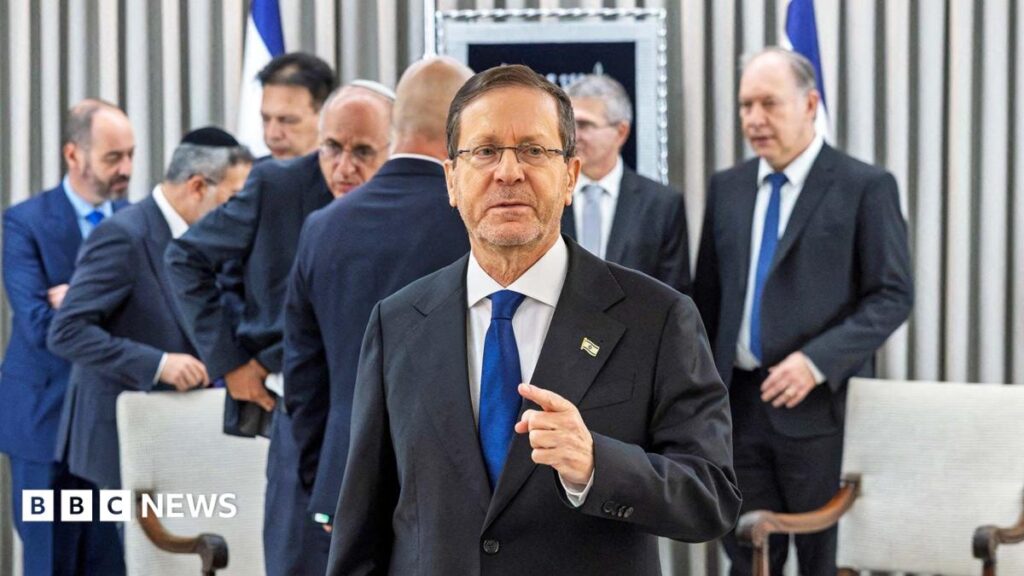
On Monday, Herzog convened a series of closed‑door meetings with the leaders of the three biggest parties, as well as with representatives of the smaller factions that could tip the scales. According to sources close to the president’s office, the talks focused on three core issues: the budget deficit, the ongoing war in Gaza, and the controversial judicial reforms that sparked mass protests last year.
Herzog publicly warned that “not every commitment and promise can be fulfilled” if a new election is forced, emphasizing the fiscal burden and the risk of further destabilising Israel’s security apparatus. The message was aimed at both the opposition, which has been reluctant to compromise on judicial changes, and the governing bloc, which wants to push its right‑leaning agenda without conceding key ministries.
Why the deadlock matters beyond Israel’s borders
Israel’s political gridlock reverberates across the Middle East and the global tech ecosystem. The country’s defence budget, which funds the development of drones, cyber‑security tools, and missile‑defence systems, is directly tied to the stability of the ruling coalition. A prolonged stalemate could delay procurement contracts that involve African partners, especially in the Horn of Africa where Israeli firms have been expanding drone‑surveillance and water‑management projects.
Moreover, Israel’s venture‑capital scene, a major source of funding for African startups in fintech and agritech, depends on a predictable policy environment. Investors watch Israeli elections closely; uncertainty can lead to a slowdown in cross‑border deals, affecting African entrepreneurs who rely on Israeli seed capital and mentorship programmes.
African perspectives: trade, security and diaspora concerns
African governments that have signed security pacts with Israel – such as Kenya, Ethiopia, and Nigeria – are monitoring the talks for any shift in Israel’s foreign‑policy priorities. A coalition that leans heavily toward the right is likely to deepen military cooperation, which could bring more Israeli training and equipment to African forces but also raise questions about regional arms races.
The Israeli‑African diaspora, estimated at over 250,000 people, is also watching closely. Many diaspora members work in high‑tech firms that serve both Israeli and African markets. A snap election would mean a short‑term disruption to business continuity, potentially prompting some to relocate or pause expansion plans on the continent.
What’s next: possible scenarios and timelines
Analysts outline three realistic outcomes. First, Herzog could grant a mandate to a centrist‑right alliance that agrees to a limited judicial reform package in exchange for a stable budget – a compromise that would keep the current Knesset in place for the next four years. Second, the president might give the mandate to a broad coalition that includes an Arab party, which would likely force a more moderate stance on the judiciary and could improve Israel’s diplomatic outreach to African nations. Third, if negotiations collapse, Herzog is constitutionally obliged to call a new election, most likely in early 2027, extending the political fatigue that already affects voter turnout.
Regardless of the path taken, the next two weeks are critical. Herzog is expected to announce his official decision within ten days, after which the chosen party leader will have 28 days to form a government. The clock is ticking, and each day of delay adds economic costs, strains Israel’s security posture, and ripples through the networks that link Israeli innovation to African development.
Quick Answers
What powers does Israel’s president have in a coalition deadlock?
The president can assign a mandate to any Knesset member he believes can form a majority, and if no coalition is built within 28 days, he must call a new election.
How could Israel’s election deadlock affect African tech startups?
Uncertainty in Israel’s policy environment can delay venture‑capital funding and joint‑development projects that many African startups rely on from Israeli investors.
When will President Herzog announce his decision on who gets the coalition mandate?
He is expected to make the announcement within ten days of his consultations, according to Israeli political analysts.
Source: www.bbc.co.uk



💬 Comments 0