Man Claims Arm Broken During Violent ICE Arrest in Long Beach, California, 2026
Background: ICE’s expanding enforcement landscape
U.S. Immigration and Customs Enforcement (ICE) has been under intense scrutiny since the 2020s, with each presidential administration reshaping its priorities. By 2026, a new administration has rolled out a series of directives that broaden the scope of raids, targeting not only undocumented migrants but also those with pending immigration cases, a shift that has alarmed immigrant advocacy groups across the country.
California, home to the nation’s largest immigrant population, has become a focal point for these operations. Long Beach, in particular, hosts a vibrant diaspora from West Africa, the Caribbean, and Latin America, many of whom work in logistics, hospitality, and the tech sector. The city’s police department often coordinates with ICE on joint operations, a practice that has sparked controversy among local officials and community leaders.
The incident: A video of a painful arrest goes viral
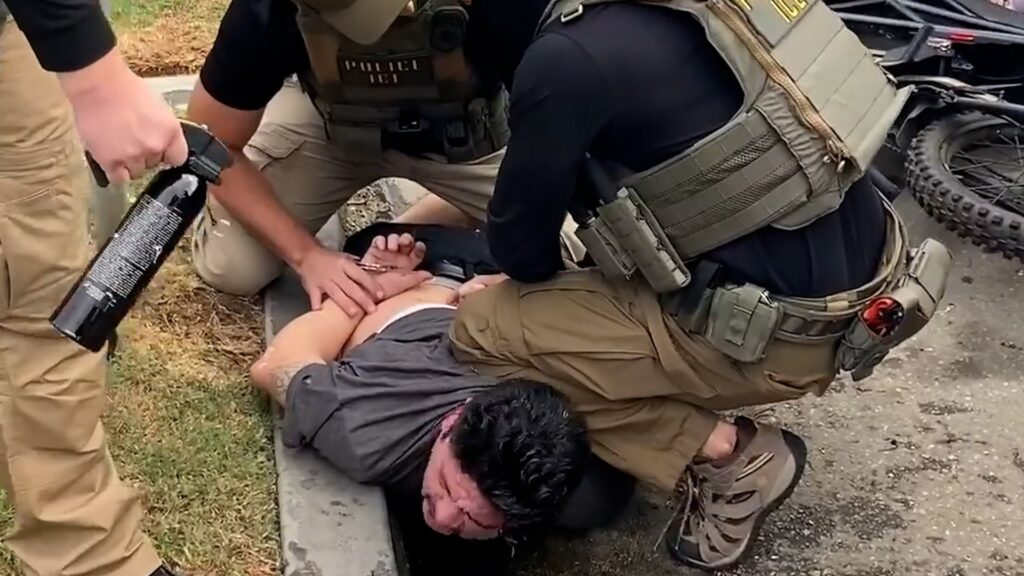
On October 18, 2026, surveillance footage from a Long Beach storefront captured a man being wrestled to the ground by several ICE agents. The video shows the man screaming as an officer pins his arm to the concrete, after which he appears to limp away with a visible injury. The man later told reporters that his arm was broken during the struggle.
Local media outlets quickly circulated the clip, prompting a wave of public outcry on social platforms. The ICE agency released a brief statement saying the agents were “acting within the bounds of the law” and that an internal review would be launched. No official medical report has been released yet, but the man’s family has reportedly filed a civil suit alleging excessive force.
Why it matters for immigrant communities, especially Africans in the U.S.
The incident reverberates beyond the immediate victim because it underscores the heightened vulnerability of African immigrants who often lack the legal resources to contest detention. According to a 2025 report by the African Diaspora Policy Institute, roughly 120,000 Africans are currently in removal proceedings, many of whom are on student or work visas that can be abruptly revoked.
In Long Beach, the Nigerian and Ghanaian communities have organized emergency fund drives to support families affected by ICE actions. Leaders of the Nigerian American Association of Southern California warned that the video could deter new arrivals and strain already‑tight labor pipelines in sectors that rely on skilled African professionals.
A broader trend: ICE’s tactics and the legal backlash
The Long Beach episode is part of a larger pattern of aggressive enforcement tactics that have drawn lawsuits from civil‑rights groups. In the past year, at least eight federal courts have issued injunctions limiting ICE’s authority to conduct “no‑knock” raids in residential settings, citing constitutional concerns. Legal scholars argue that the video may provide new evidence for challenging the agency’s use of force standards.
Moreover, the incident aligns with a surge in public‑interest litigation targeting ICE’s accountability mechanisms. A coalition of NGOs filed a class‑action suit in March 2026 alleging that ICE’s training manuals insufficiently address de‑escalation, a claim that could force the agency to revise its protocols if the courts find merit.
What’s next: investigations, policy debates, and community response
The Department of Homeland Security has announced a “comprehensive review” of the Long Beach arrest, but insiders say the process could take months. Meanwhile, the Long Beach City Council has scheduled a public hearing to discuss whether the city should limit its cooperation with ICE, a move that mirrors similar debates in San Francisco and New York.
For African diaspora groups, the focus is on building legal defense funds and lobbying state legislators to pass “sanctuary‑state” protections. If successful, such measures could shield undocumented Africans from future raids, but they also risk a political backlash from federal officials who argue that sanctuary policies undermine national security.
Quick Answers
What injury did the man claim to have sustained during the ICE arrest?
He said his arm was broken after agents pinned him to the ground.
How might this incident affect African immigrants in the United States?
It could increase fear of detention, prompt legal challenges, and spur community fundraising to support those facing ICE actions.
What legal steps are being taken after the Long Beach video surfaced?
ICE announced an internal review, while civil‑rights groups have filed lawsuits alleging excessive force and inadequate training.
Source: www.aljazeera.com




💬 Comments 0