Russian drone strike on Dnipro train station kills 14, injures 11‑year‑old boy – 2026
Escalating drone warfare in the Ukrainian front
Since the start of the war, Russia has increasingly relied on loitering munitions and commercial‑grade drones to hit soft targets deep inside Ukrainian territory. The tactic, dubbed “kamikaze‑drone warfare” by analysts, allows Moscow to strike infrastructure without committing large air‑defence resources. By 2026, the Ukrainian air‑defence network has been stretched thin, especially in the central oblasts where industrial hubs and transport corridors are vital for both the war effort and civilian life.
Dnipro, the fourth‑largest city in Ukraine, sits on the Dnieper River and serves as a logistical artery for the country's rail network. The city’s central train station handles thousands of passengers daily and links the western front to the eastern industrial belt. In recent months, Ukrainian officials have warned that the station is a strategic node for moving troops, equipment, and humanitarian aid, making it a tempting target for Moscow’s drone campaign.
What happened at the Dnipro train station
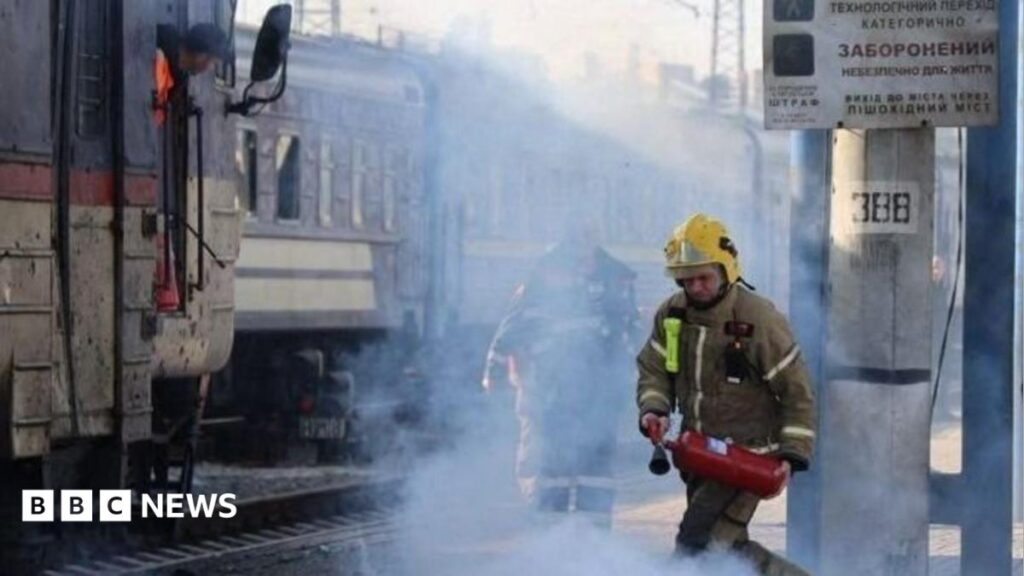
On the morning of 30 October 2026, a Russian‑launched Shahed‑type loitering munition descended on Dnipro’s main railway hub. The explosion tore through the concourse, igniting a fire that quickly spread to nearby platforms. Local emergency services reported at least 14 fatalities, including a 62‑year‑old pensioner, and more than a dozen injuries, among them an 11‑year‑old boy who suffered shrapnel wounds to his arm.
Witnesses described a deafening roar followed by a plume of black smoke that lingered over the station for several minutes. The blast disabled the station’s signaling system, halting all rail traffic in and out of the city for several hours. Rescue crews, many of them volunteers, worked through the night to clear debris and tend to the wounded, while hospitals in Dnipro reported a surge in trauma cases.
Why the attack matters beyond the immediate tragedy
The strike underscores a shift in Russian strategy toward targeting civilian infrastructure that indirectly supports the war machine. By crippling a transport hub, Moscow hopes to sow chaos, disrupt supply chains, and erode public morale. Experts say that repeated attacks on railways could force Ukraine to divert scarce resources from frontline operations to protect and repair civilian logistics.
Humanitarian consequences are also significant. The Dnipro station is a key entry point for aid shipments destined for internally displaced persons (IDPs) in central Ukraine. Interruptions in rail service delay food, medicine, and winter heating supplies, increasing the risk of a secondary humanitarian crisis as winter approaches.
Ripples for Africa: grain exports, diaspora, and aid routes
Ukraine is the world’s second‑largest exporter of wheat and a major supplier to North‑African and West‑African markets. The Dnipro rail hub feeds the Black Sea ports of Odesa and Chornomorsk, where grain is loaded onto cargo ships bound for Lagos, Casablanca and Accra. Any prolonged disruption to rail traffic can delay grain shipments, potentially tightening already volatile food‑price dynamics in the Sahel and the Horn of Africa.
The Ukrainian diaspora in Europe and North America, many of whom maintain business links to African agribusinesses, watch these developments closely. A slowdown in grain exports can affect contracts, pricing, and the ability of African importers to secure affordable wheat for domestic flour mills. Moreover, NGOs that coordinate food‑security programmes across the continent rely on the steady flow of Ukrainian grain; a bottleneck could force them to seek costlier alternatives from the United States or Russia, reshaping trade patterns.
Finally, the attack raises security concerns for humanitarian convoys that travel through Ukraine to reach conflict‑adjacent regions like the Turkish border, from where aid is often redirected to Sudan, Ethiopia and the Democratic Republic of Congo. Increased drone activity forces NGOs to reassess route safety, potentially adding to delivery costs and delays.
International reaction and Ukrainian response
Western governments condemned the strike as a violation of international humanitarian law, calling for stronger sanctions on entities that supply drone technology to Russia. The United States and the European Union announced a coordinated effort to tighten export controls on dual‑use components that could be repurposed for loitering munitions.
Kyiv’s military spokesperson said the Ukrainian armed forces would “intensify” counter‑drone operations around critical infrastructure, including the deployment of additional electronic‑warfare systems along the Dnipro rail corridor. The defence ministry also hinted at a possible retaliatory strike on a Russian logistics depot, though no official order has been confirmed.
Civil society groups within Ukraine have launched a fundraising drive to rebuild the station and support the families of victims. The campaign, organized by a coalition of local NGOs and the Ukrainian Railways, has already raised over €2 million, a portion of which is earmarked for psychological counselling for child victims.
What comes next for the conflict and the region
If drone attacks on transport nodes continue, Ukraine may be forced to reroute cargo through longer, less secure road corridors, increasing logistical costs and exposure to artillery fire. Analysts predict a rise in insurance premiums for freight operators and a possible slowdown in the reconstruction of war‑torn areas, as investors weigh the risk of recurring disruptions.
For African markets, the key takeaway is the need to diversify grain import sources and to build strategic reserves. Several African ministries of agriculture have already begun emergency talks with alternative exporters, while regional bodies such as the African Union are urging member states to develop inland storage facilities that can buffer short‑term supply shocks.
In the broader geopolitical picture, the Dnipro attack may accelerate diplomatic pushes for a cease‑fire that includes a clause on protecting civilian infrastructure. Until such mechanisms are in place, the pattern of drone‑driven strikes is likely to persist, keeping civilian populations in the cross‑hairs of a conflict that has already stretched far beyond the battlefield.
Quick Answers
How many people were killed in the Dnipro train station drone attack?
At least 14 people were confirmed dead in the strike.
Why could the attack affect food prices in Africa?
Dnipro’s rail hub feeds Ukrainian grain exports to African ports; disruptions can delay shipments and tighten global wheat supplies, pushing up prices.
What is Ukraine doing to prevent future drone strikes on railways?
Kyiv plans to boost electronic‑warfare systems and deploy more anti‑drone assets along critical rail corridors.
Source: www.bbc.co.uk




💬 Comments 0