Spain train crash 2026: Audio shows control centre cleared stalled train, overhaul
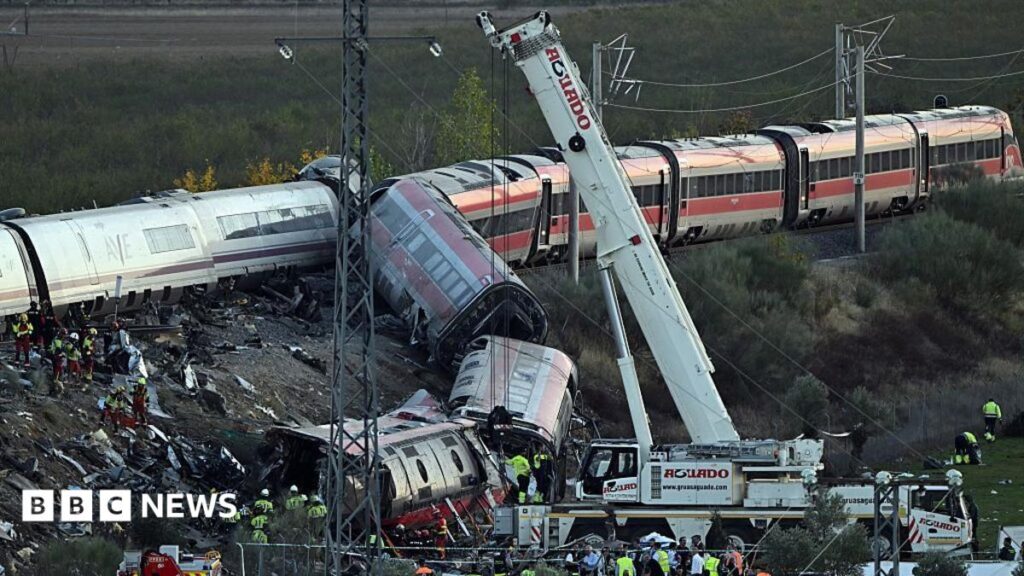
The tragedy that shocked Spain
On the night of October 22, 2026, a high‑speed AVE train travelling from Barcelona to Madrid collided with a stalled service near the town of Almería, killing 12 passengers and injuring dozens more. The crash, one of the deadliest in Spain’s modern rail history, halted the nation’s celebrated high‑speed network for several days while emergency crews worked to clear the wreckage and tend to victims.
Investigators quickly confirmed that the rear train had been given a green signal to proceed, even though the preceding unit had lost power and was unable to move. Survivors described a sudden, violent jolt that threw them forward, while the train’s onboard data recorders showed a spike in speed just seconds before impact.
The incident reignited public debate over the safety of Spain’s expanding high‑speed system, which carries more than 150 million passengers annually. Critics argued that the pressure to maintain tight timetables may have encouraged risky operational decisions, while the government pledged a full inquiry and promised to hold those responsible to account.
What the leaked audio reveals
A recording obtained by Spanish newspaper El País and released on October 27 captures the dialogue between the control centre in Madrid and the two train drivers minutes before the collision. In the exchange, the dispatcher clears the second train to “proceed at line speed,” despite a clear acknowledgement from the first driver that his train is “out of service” and “unable to move.”
The audio also shows a brief pause during which the dispatcher appears to request clarification, but the response is either missed or misinterpreted. Within ten seconds, the second train accelerates, and the collision follows. Experts say the transcript points to a breakdown in standard operating procedures that require confirmation of a train’s status before issuing a clearance.
While the recordings have not been officially authenticated by the national railway authority, the Ministry of Transport has said it will treat the material as a key piece of evidence. Legal analysts suggest that the audio could become central to any civil or criminal proceedings, potentially implicating both the dispatcher and senior managers responsible for safety oversight.
Why the communications matter for rail safety
Rail safety relies on a chain of communication that leaves little room for error; a single misstep can cascade into a catastrophic event. The Spanish case highlights how human factors—fatigue, misreading of signals, or pressure to keep trains on schedule—can undermine even the most advanced signalling technology such as the European Train Control System (ETCS).
The European Union has been pushing for greater automation to reduce reliance on verbal clearances, yet many national networks still use hybrid systems where human operators confirm automated commands. The audio suggests that Spain’s hybrid model may still be vulnerable, especially during peak traffic when dispatchers juggle multiple trains simultaneously.
Furthermore, the incident raises questions about training standards for dispatchers and drivers. According to a report by the International Union of Railways (UIC), continuous professional development is uneven across member states, and Spain’s recent rapid expansion of its high‑speed network may have outpaced the rollout of updated safety curricula.
Implications for Europe and beyond
In the wake of the crash, the European Railway Agency (ERA) announced a review of clearance protocols across all member states, signalling a possible tightening of EU‑wide safety regulations. The agency is expected to issue new guidelines that would require mandatory read‑back verification for any clearance given to a train that is following a stalled unit.
Legal repercussions are also on the horizon. Families of the victims have filed lawsuits alleging negligence, and the Spanish government faces potential compensation claims that could run into hundreds of millions of euros. Such financial pressure may accelerate investment in automated safety systems that can override human error.
The incident could affect cross‑border services as well. Spain’s high‑speed links with France and Portugal have been marketed as seamless corridors for business travelers. A loss of confidence could depress passenger numbers, prompting operators to rethink pricing strategies and marketing campaigns aimed at tourists and the diaspora.
Lessons for Africa’s rail ambitions
Africa is witnessing a surge of high‑speed rail projects, from Morocco’s Al Boraq line to Kenya’s planned Nairobi‑Mombasa corridor. The Spanish crash serves as a cautionary tale for policymakers who are eager to showcase modern infrastructure but may overlook the human element of safety management.
Several African governments have signed memoranda of understanding with European firms to import signalling technology similar to Spain’s ETCS. The recordings underscore the need for robust training programs and clear procedural safeguards before such systems are deployed on the continent’s relatively nascent networks.
Diaspora investors and expatriates watching these developments are likely to demand transparency. A recent survey by the African Development Bank found that 68% of African investors consider safety standards a decisive factor when funding transport projects. The Spanish incident may therefore influence financing terms, prompting lenders to require stricter oversight clauses.
Quick Answers
What caused the Spain high‑speed train crash in October 2026?
A stalled train ahead was mistakenly cleared to move by the control centre, leading the following high‑speed train to collide with it.
How might the crash affect Africa’s high‑speed rail projects?
The incident highlights the importance of rigorous safety protocols and training, prompting African governments and investors to demand stronger oversight before adopting similar technology.
Will Spain change its rail safety rules after the crash?
The European Railway Agency is reviewing clearance procedures, and Spain’s transport ministry has pledged a comprehensive overhaul of communication protocols.
Source: www.bbc.co.uk




💬 Comments 0