Xi Jinping’s 2026 Party Purge Record: 1,400 Officials Removed, Impact on China‑Africa Trade and Power Balance
Background: The evolution of Xi’s anti‑corruption crusade
When Xi Jinping took the helm of the Communist Party in 2012, he launched a sweeping anti‑corruption campaign that quickly became the signature of his rule. Early high‑profile cases – former security chief Zhou Yongkang and former Politburo Standing Committee member Bo Xilai – were presented as proof that no senior official was untouchable. Over the past decade the campaign has shifted from a public‑moral crusade to a tool for reshaping the party’s power matrix, according to analysts at the Carnegie Endowment for International Peace.
The campaign’s intensity has ebbed and flowed, but each major party congress has produced a fresh wave of dismissals, investigations, and forced retirements. By 2024, roughly 1,200 officials at provincial and ministerial level had been removed, a figure that set the stage for the unprecedented numbers reported at the most recent Politburo meeting.
The 2026 Politburo gathering: a record‑setting purge
At the October 2026 plenary session of the Central Committee, party leaders announced that 1,400 officials had been disciplined or expelled – the highest tally since Xi’s first term. The list included several deputy ministers in the Ministry of Commerce, senior executives of state‑owned enterprises (SOEs) linked to the Belt and Road Initiative, and a handful of provincial party secretaries in coastal provinces that host the bulk of China‑Africa trade.
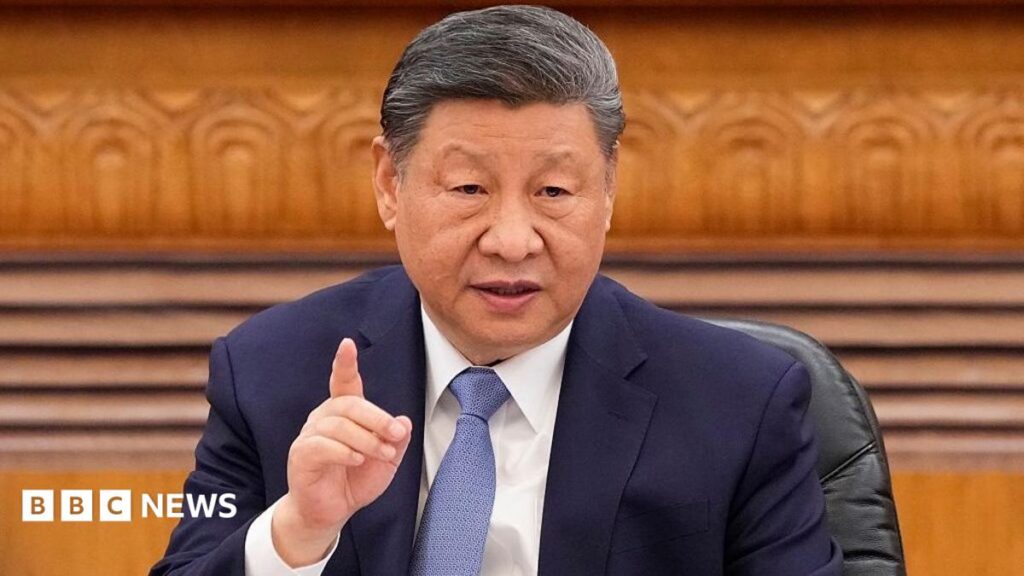
Party General Secretary Xi Jinping framed the crackdown as a reinforcement of “strict party discipline” and warned that “any deviation from the central line will be met with decisive action.” Observers from the Brookings Institution noted that the timing – just months before the next National People’s Congress – suggests a deliberate move to consolidate Xi’s authority ahead of major policy debates.
Why the purge matters for China’s domestic landscape
The sheer scale of the 2026 purge signals a tightening of central control over both the party and the state‑run economy. By removing officials who have built autonomous power bases, Xi can install loyalists who will push the “dual circulation” strategy, which prioritises internal consumption while still courting foreign investment. This re‑balancing could reshape credit allocation, especially for private firms that have long relied on local officials to secure financing.
At the same time, the crackdown raises concerns about bureaucratic stability. Frequent leadership turnover can stall policy implementation and create uncertainty for businesses that depend on predictable regulatory environments. A recent survey by the China Institute for Market Research found that 42 % of midsized manufacturers reported “delays in approvals” after the purge, a sentiment echoed by foreign investors who fear a tightening of oversight.
Ripple effects on Africa‑China economic ties
China’s engagement with Africa – from infrastructure financing to mineral extraction – is heavily mediated by the very officials now under investigation. The removal of deputy ministers in the Ministry of Commerce and senior SOE executives could delay approvals for projects such as the Lagos‑Kano railway upgrade and the Zambia copper‑smelter expansion, both slated for 2027. Sources close to the African Development Bank say that “the risk of procedural bottlenecks has risen,” prompting some African governments to reconsider the timing of new contracts.
For African exporters, the purge may also affect market access. The Ministry of Commerce’s anti‑dumping unit, which recently saw several senior officers disciplined, is responsible for setting tariff quotas on Chinese imports of African agricultural products. A tighter, more ideologically driven oversight could lead to stricter quota enforcement, potentially squeezing African farmers who rely on the Chinese market for corn, soy, and cocoa sales.
Reactions from Beijing, Africa and the global community
Within China, state media praised the purge as a “necessary cleansing” that will safeguard the party’s purity. However, senior scholars at the Chinese Academy of Social Sciences cautioned that “over‑centralisation may erode the pragmatic flexibility that has powered China’s rapid development.” In Lagos, the Nigerian Ministry of Foreign Affairs issued a diplomatic note asking for “clarity on pending infrastructure agreements,” signalling that African capitals are monitoring the fallout closely.
Western think‑tanks, including the Council on Foreign Relations, warned that the purge could reverberate through global supply chains, especially for rare‑earth minerals sourced from the Democratic Republic of Congo and Tanzania. If Chinese firms face internal delays, downstream manufacturers in Europe and the United States may encounter shortages, a scenario that could accelerate calls for diversification of supply sources.
What’s next: possible trajectories for China’s political and economic agenda
Analysts expect Xi to use the newly installed loyalists to push forward the 2026‑2030 five‑year plan, which emphasizes high‑tech self‑sufficiency and deeper integration of Africa into the Belt and Road network. The next National People’s Congress, scheduled for March 2027, will likely showcase revised trade targets that could either reassure African partners with new financing pledges or heighten anxieties if the focus shifts to domestic priority sectors.
For African investors and governments, the key takeaway is to diversify engagement channels. Engaging directly with provincial authorities, leveraging multilateral development banks, and exploring partnerships with non‑Chinese private capital may mitigate the risk of sudden policy shifts emanating from Beijing’s internal power reshuffle.
Quick Answers
How many officials were purged at the 2026 Chinese Politburo meeting?
The Central Committee announced that 1,400 officials were disciplined or expelled, the highest number recorded under Xi Jinping.
What impact could the purge have on Chinese investment projects in Africa?
The removal of senior commerce ministers and SOE executives may delay approvals for infrastructure and mining projects, creating uncertainty for African governments and exporters.
Is Xi’s anti‑corruption campaign still about fighting graft or mainly about consolidating power?
While the campaign continues to target genuine corruption, most experts agree it now serves as a strategic tool for Xi to tighten party discipline and eliminate rival power bases.
Source: www.bbc.co.uk




💬 Comments 0